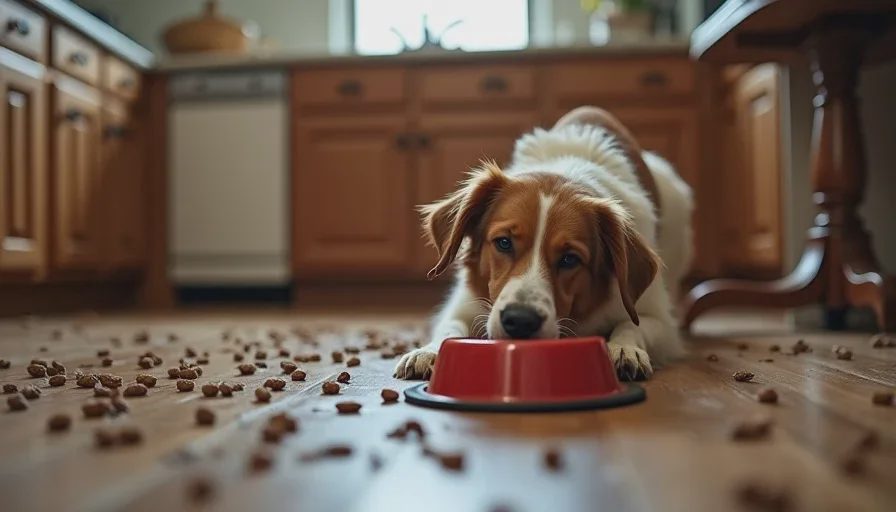
For the first three weeks, mealtime in our house was a contact sport.
The dog’s bowl slid across the kitchen floor like a hockey puck, leaving a trail of kibble and water in its wake. The cat’s bowl was parked right next to it, which meant they both ate nervously, ears pinned back, guarding their food from each other. I was scooping portions with a random coffee mug because I’d lost the actual measuring cup, so every meal was a complete guess. Some days I overfed. Some days I underfed. And I had no idea which was which.
The floor was always sticky. The cat was always trying to steal the dog’s food. The dog was always trying to shove her face into the cat’s bowl. And I was always frustrated.
I learned this one the messy way.
I thought feeding was the easy part of pet ownership. It turns out, it’s one of the most chaotic parts of the day—if you don’t set it up right.
After three weeks of slipping on kibble and playing food referee, I finally redesigned our feeding station from scratch. The result? Less mess, zero stress at mealtime, and no more guessing about portions.
Here’s exactly what I changed—and why it worked.
The Four Problems With Our Original Setup
Before I tell you what I fixed, let me walk you through the original disaster so you can see if any of this sounds familiar:
Problem #1: The Bowls Were in a High‑Traffic Zone
Our feeding station was in the middle of the kitchen walkway. Every time someone walked past, the bowls got kicked. Water splashed everywhere. Kibble crunched underfoot. It was a hazard.
Problem #2: Dog and Cat Bowls Were Too Close
I put them side‑by‑side because I thought it would be "cute" for them to eat together. Instead, they were both anxious eaters. The dog ate too fast, worried the cat would steal her food. The cat barely ate at all, worried the dog would lunge at her.
Problem #3: No Mat, No Barrier
I didn't use a mat under the bowls. Water spilled onto the floor, the bowls slid around, and kibble scattered everywhere. I was sweeping multiple times a day.
Problem #4: Guessing Portions
I had no idea how much to feed either pet. I lost the measuring cup that came with the food bag, so I used whatever scoop was nearby. Some days the dog got a full cup; some days she got a half‑cup. No consistency meant weight fluctuations, upset stomachs, and a dog who acted hungry all the time because she never knew when her next meal was coming.
Step 1: Relocate to a Quiet, Low‑Traffic Corner
The first thing I did was move the feeding station completely out of the main walkway.
What I chose:
A corner of the laundry room, right next to the back door. It’s out of the main flow of the house, but still accessible. There’s no foot traffic, no kids running past, no loud appliances (like the dishwasher) that startle them while they eat.
For multi‑pet homes: If you have both a dog and a cat, this is where you create separate feeding zones. We put the dog’s bowls in the laundry room corner and the cat’s bowls on a low shelf in the adjacent mudroom. They’re separated by a half‑wall, so they can’t see each other while eating. That alone cut their mealtime anxiety in half.
Rule of thumb: Pick a spot where your pet can eat without being interrupted, stepped over, or startled. A corner, a niche, or even a larger bathroom works perfectly.
Step 2: Upgrade to Stainless Steel Bowls With Rubber Bases
I was using ceramic bowls that looked pretty but slid across the floor with every nudge. I also had a plastic bowl that started to smell weird after a few washes (plastic holds bacteria, by the way—not great for food or water).
What I switched to:
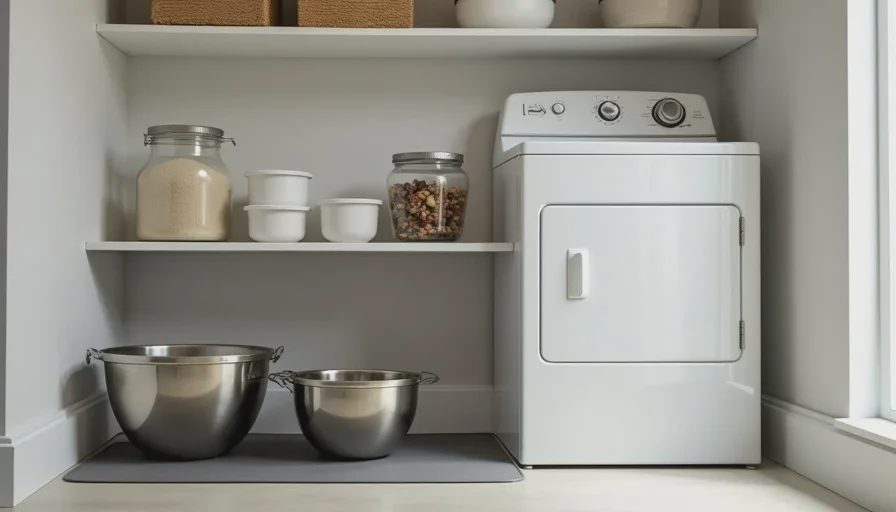
Two stainless steel bowls with silicone or rubber rings on the bottom. They don't move. They don't tip. They’re dishwasher‑safe, don't harbor bacteria, and they’re basically indestructible.
One for food, one for water—and I got a second pair for the cat (same material, slightly smaller size). Stainless steel also doesn’t absorb odors, so the water actually tastes fresh.
Don’t bother with: Elevated stands unless your vet recommends them. Most dogs eat perfectly fine from floor bowls. And "slow feeder" bowls are useful only if your dog inhales food—we’ll talk about that separately if you need it.
Step 3: Put a Silicone Mat Under Everything
This was the single biggest game‑changer for spills.
What I did:
I bought a large, heavy‑duty silicone mat (the kind you put under dish racks) and placed it under the dog’s bowls. I got a smaller one for the cat’s bowls.
Why it works:
The mat catches spilled water and kibble.
The rubberized surface stops the bowls from sliding.
It’s easy to clean—just lift it, shake it outside, or wipe it down with a cloth.
It protects the floor from scratches, moisture damage, and stains.
Now, instead of sweeping multiple times a day, I shake the mat out once after dinner. That’s it. No more sticky floors, no more crushed kibble underfoot.
Step 4: Actually Measure the Food (Stop Guessing)
This one sounds obvious, but I didn't realize how much I was over‑ or under‑feeding until I started measuring consistently.
What I did:
I bought a dedicated measuring cup (1‑cup size) and labeled it "Dog Food" with a permanent marker. I also bought a smaller one (1/2‑cup) for the cat’s kibble. They live right next to the food storage containers, so I never have to search for them.
My routine:
Every morning and evening, I use the same cup to scoop the same amount.
I check the food bag’s feeding guide and adjust based on activity level and weight (I weigh my pets monthly at home on a bathroom scale—yes, it’s possible, you just hold them and subtract your own weight).
Why it matters: Pets thrive on consistency. When they get the same amount of food at roughly the same time every day, their digestion regulates, their energy levels stabilize, and they stop that frantic "I'm starving!" behavior at every meal. My dog stopped scarfing her food because she knew she'd get fed again soon.
Step 5: Store Food Properly to Keep It Fresh
Before I fixed the feeding station, I stored the giant bag of dog food on the garage floor, rolled down and clipped shut. Within two weeks, it started to taste stale, and my dog refused to eat it.
What I switched to:
I bought two airtight food storage containers with sealing lids—one large one for the dog’s kibble, one medium one for the cat’s. They sit on a sturdy shelf above the bowls, away from pests and moisture.
Rule for freshness:
Keep food in a cool, dry place (not the garage if it gets hot or humid).
Use the food within 30 days of opening.
Wash the storage container between bags to prevent old oil residue from going rancid.
I also keep a small scoop inside the container so I don’t have to dig with the measuring cup. The process is now: open lid, scoop, pour, close lid. Ten seconds per meal.
Step 6: The Water Station Upgrade
Water used to be an afterthought. I filled the bowl when I remembered, and I noticed the dog was drinking less than she should.
What I did:
I added a second water bowl in the living room (away from the food station). Both bowls get refreshed twice a day—morning and evening.
I wash the bowls with hot soapy water daily. Scummy bowls are unappealing to pets, just like dirty glasses are unappealing to us.
In the summer, I add a few ice cubes to keep the water cool.
Optional: If your pet doesn't drink enough, consider a pet water fountain—the moving water encourages them to drink more. But start with clean, fresh bowls before spending money on gadgets.
Step 7: The "No Stealing" Strategy (Dog + Cat Homes)
The biggest stress at mealtime was the cat–dog food theft. The dog would inhale her food and then try to shove her head into the cat's bowl. The cat would stop eating and just guard her food, which stressed her out.
Our solution:
The cat’s bowls are now on a high counter (the laundry room shelf) that the dog can’t reach.
The dog’s bowls are on the floor, but in a separate corner.
We feed them at the same time, but with a baby gate between them for the first 10 minutes. The cat eats in peace, the dog eats in peace, and then we remove the gate once both are done.
Now, mealtime is quiet. The dog doesn't scarf her food because she knows the cat’s food is inaccessible. The cat actually finishes her meal instead of walking away hungry.
The Final Setup (What It Looks Like Now)
Here’s a snapshot of our current feeding station in the laundry room:
Location: Low‑traffic corner near the back door.
Mat: Large silicone mat under the dog’s bowls, smaller one under the cat’s bowls on a shelf.
Bowls: Stainless steel with rubber bases—one food, one water for each pet.
Measuring tools: Marked 1‑cup and 1/2‑cup scoops, stored next to containers.
Storage: Two airtight containers on a high shelf, plus a backup bag in the pantry.
Water: Two bowls—one near the food, one in the living room—refreshed twice daily.
Cat–Dog separation: Cat bowls elevated and gated off during mealtime.
Total cost to upgrade: Under $60.
Total time to set up: About 15 minutes.
The payoff? Zero spills, zero fights, zero guessing, and a dog and cat who actually relax at mealtime.
The Everyday Impact
The day after I set up this new system, I noticed something. The dog ate her breakfast calmly. The cat ate hers without looking over her shoulder. I cleaned up in 30 seconds instead of 10 minutes.
And the biggest change? My dog stopped acting constantly hungry. She knew exactly when food was coming and exactly how much she’d get. That predictability made her calmer for the rest of the day.
If I could reset the first month, this would be one of the first things I’d set up—not three weeks later. It sounds like a small thing, but a calm, clean feeding routine sets the tone for everything else.

Letters
No letters yet. Yours could be the first.