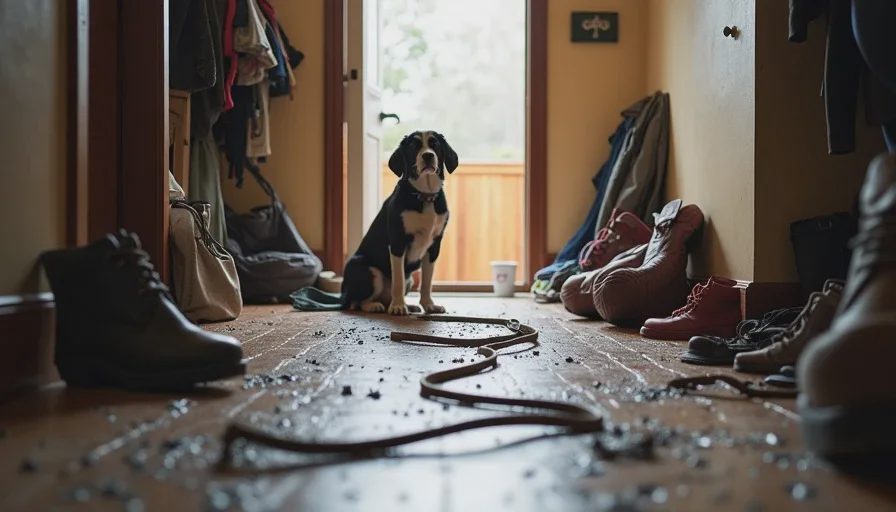
By the end of week two, I was standing in my kitchen, stepping over a food bowl that had migrated across the floor, avoiding a puddle of water near the fridge, and trying to remember where I’d last seen the leash. The entryway had become a mud-and-toy graveyard. The litter box was in a corner that made scooping feel like a contortionist act. And my dog kept sneaking into rooms she wasn’t supposed to be in because I hadn’t thought to block them off.
I had spent so much time reading about what to buy that I forgot to think about where to put everything.
I learned this one the messy way.
If I could go back and rearrange our house before bringing that rescue dog home, I’d save myself weeks of frustration, cleaning, and confusion. Here are the five home setup mistakes that made our first month harder—and the simple fixes that finally gave us some breathing room.
Mistake #1: No “Safe Zone” for the Pet (and No “Off‑Limits” Zones for Us)
We brought our dog home and let her roam everywhere. We thought that would make her feel welcome. Instead, she was overwhelmed. She didn’t know where to settle, and we didn’t know how to give her space when she needed it.
What we did wrong:
No crate or designated quiet corner with a bed.
No baby gates to block off the upstairs or the kitchen.
No clear “this is your spot” signal.
The fix:
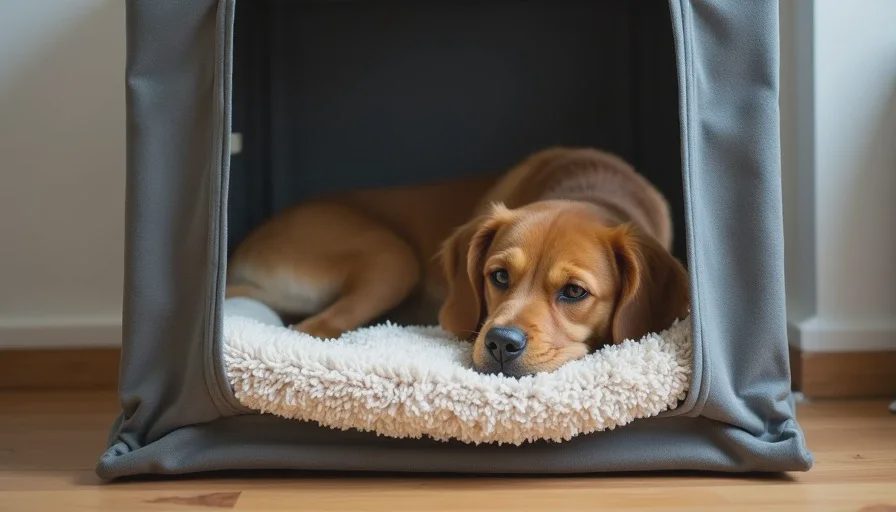
Set up a safe zone before day one. For our dog, that meant a crate with a soft blanket in the living room corner, plus a small exercise pen nearby for times when we couldn’t watch her. For our cat, we put a tall cat tree in a quiet bedroom so she could escape the dog.
Also, use baby gates to block off areas you don’t want your pet in—like the nursery, the home office, or the carpeted bedrooms. It’s easier to expand access later than to undo bad habits.
The result: Within a few days, our dog started going to her crate on her own when she was tired. That “safe zone” became her reset button, and ours too.
Mistake #2: Feeding Station in the Wrong Spot
I put the food and water bowls in the middle of the kitchen walkway. Big mistake. Bowls got kicked, water sloshed everywhere, and the dog would drag kibble across the room. The cat’s bowl was right next to the dog’s, which made them both nervous eaters.
What we did wrong:
Bowls in high‑traffic areas.
Dog and cat bowls too close together.
No mat underneath to catch spills.
The fix:
Move the feeding station to a low‑traffic corner of the kitchen or laundry room. Place a silicone mat under both bowls. For multi‑pet homes, feed them in separate locations—we put the cat’s bowl on a counter (dog can’t reach) and the dog’s bowl on the floor a few feet away.
Also, keep a small dustpan and brush nearby for quick kibble cleanups. And always have a backup water bowl in another room (we put one in the living room).
The result: Fewer spills, less stress at mealtime, and we stopped slipping on wet floors.
Mistake #3: Litter Box Placement Disaster (for Cat Owners)
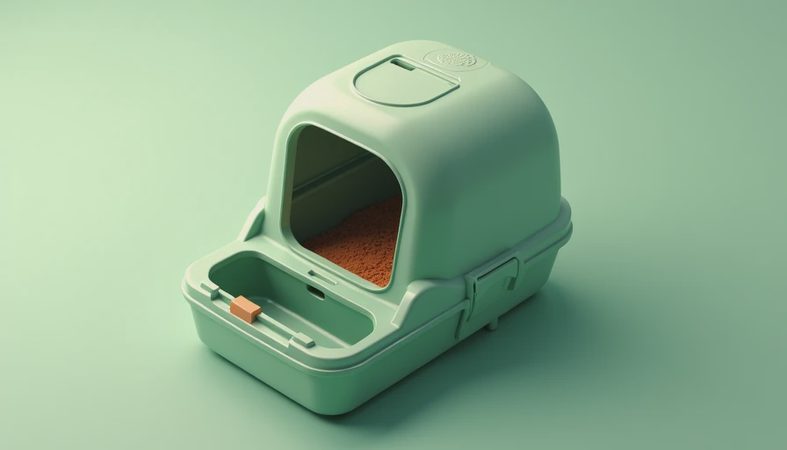
I put the litter box in the basement because I didn’t want it in a main room. Problem: our cat was too scared to go down there alone, especially with a new dog around. She started having accidents on the first floor.
What we did wrong:
Put the box too far away, in a dark or noisy area.
Used a covered box (she hated the enclosed feel).
Only had one box for one cat (luckily she used it, but it got dirty fast).
The fix:
Place the litter box in a quiet, accessible, well‑lit spot on the main floor—like a corner of the laundry room, a bathroom, or a mudroom. Avoid high‑traffic areas and loud appliances. Use an open, uncovered box for the first few weeks so your cat feels safe. And scoop daily—we kept a litter genie right next to it for convenience.
The result: No more accidents, and scooping became a quick 2‑minute task instead of a dreaded basement expedition.
Mistake #4: Entryway Chaos – Leash, Mud, and Storage Pile‑Up
Our entryway was the landing zone for everything: shoes, backpacks, mail, and—suddenly—leashes, poop bags, wet towels, and muddy paws. It became an obstacle course. Every time we needed to go for a walk, we spent five minutes hunting for the leash.
What we did wrong:
No dedicated hook or bin for pet gear.
No mat for wiping paws.
No place to hang wet towels or store clean poop bags.
The fix:
Install a simple wall hook or coat rack right by the door for leashes and collars. Put a small basket or tray on a nearby shelf for poop bags, treats, and a spare towel. Add a washable door mat that can handle mud—we bought a coarse coir mat and a machine‑washable indoor mat.
We also kept a small spray bottle of water and a towel by the door to quickly wipe paws before they tracked mud through the house.
The result: We could grab the leash and go in seconds. The entryway stopped looking like a disaster zone, and our dog learned that the door area meant “outside time.”
Mistake #5: No Cleaning Station or Emergency Kit Ready
Accidents happen. On our third day, our dog had a diarrhea episode on the living room rug. I ran to the closet and realized I had no enzyme cleaner, no paper towels, and no old rags. I ended up using a kitchen towel and some dish soap—which did nothing for the smell.
What we did wrong:
Didn’t have cleaning supplies staged and ready.
No designated “pet mess” kit.
Didn’t have a backup plan for dirty laundry.
The fix:
Create a pet cleaning station—a small tote or caddy that lives in a closet or under the sink. Fill it with:
A large bottle of enzyme‑based stain remover (the only thing that really works on urine/feces).
A roll of paper towels or a stack of cheap washable rags.
A small spray bottle of plain water for pre‑dampening stains.
Poop bags for solid waste pickup.
A pair of rubber gloves (you’ll thank me later).
Also, designate a laundry hamper just for pet bedding and towels—so you’re not mixing them with your family’s clothes.
The result: When the next accident happened (and it did), I had everything in arm’s reach. Cleanup took two minutes instead of twenty, and the rug didn’t retain that tell‑tale odor.
The Takeaway: Think About Flow, Not Just Decor
Your home is not a showroom—it’s a living space for people and pets. The best setup is one that works with your daily movement, not against it. Before your pet arrives, walk through your house and imagine:
Where will they eat?
Where will they sleep?
Where will they go to the bathroom (inside or outside)?
Where will you store their gear?
Where will you clean up messes?
Write down a simple floor plan. It doesn’t have to be pretty—just functional. And remember, you can always adjust. We moved our feeding station twice and the litter box once before we found the sweet spot.
If I could reset that first month, I’d spend less time picking out cute accessories and more time thinking about traffic flow, accessibility, and cleanliness. Your pet doesn’t care if the bowl matches the curtains. They care that they feel safe and you feel calm.
What’s Next?
Now that your home is set up for success, the next big challenge is understanding your pet’s behavior. Next week, I’ll share what I thought was “bad behavior” that was actually no routine at all—and how a simple schedule turned everything around.
In the meantime, tell me: What’s the most chaotic spot in your house right now? I’ll bet I’ve got a fix for it.


Letters
No letters yet. Yours could be the first.