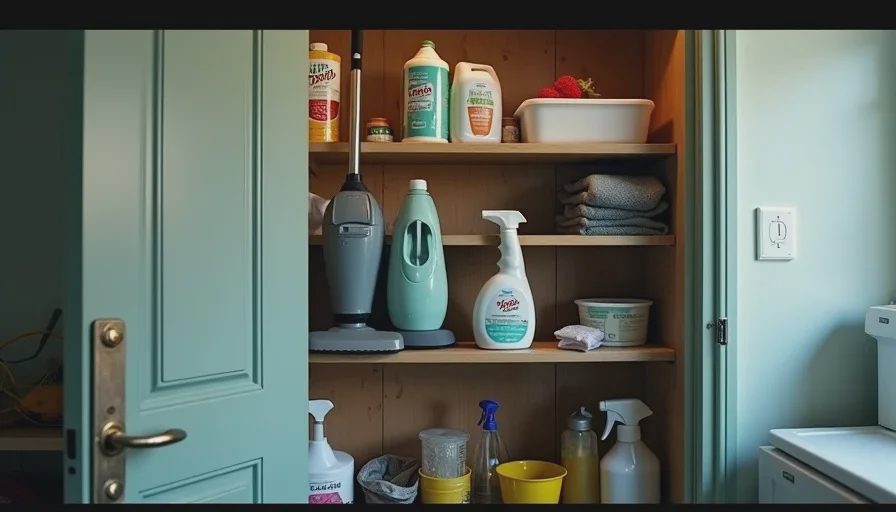
I have a cabinet in my laundry room that used to be a graveyard of failed pet cleaning products.
A steam mop I used twice. A carpet shampooer that was too heavy to haul out and took three hours to dry. A "pet odor eliminator" candle that made the house smell like a fake pine forest with a hint of wet dog underneath. A scented carpet powder that just turned into a gritty paste when it got wet. A squeegee thing for hair that broke on the second use. And at least four different bottles of spray that all claimed to "eliminate odors instantly" and none of which did.
I spent probably $250 in the first three months trying to solve one problem: keeping a house clean while living with a rescue dog and a cat.
I learned this one the messy way.
Here's what I eventually figured out, and it took me embarrassingly long to get there:
Pet messes are a chemistry problem, not a product problem. Once I understood what actually works—and stopped buying things because the label had a paw print on it—my cleaning routine got shorter, cheaper, and dramatically more effective.
So here's my honest kit. What I rebuy without thinking, what I threw away, and what I'd tell a new pet owner to skip entirely.
The Single Most Important Thing I Learned
Before the list, here's the principle that changed everything:
Odors are not a smell problem. They're a residue problem.
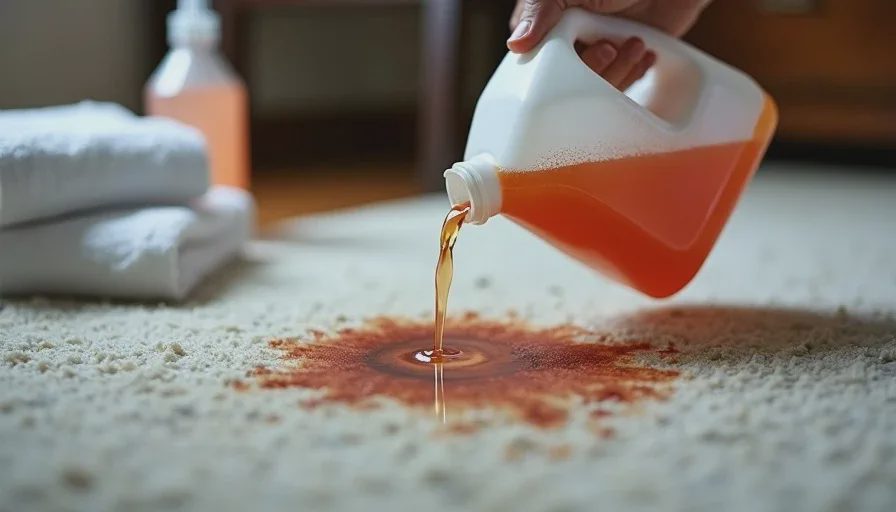
If urine, feces, vomit, or drool leaves protein residue behind, the smell comes back every time humidity rises. No candle, no air freshener, no "odor neutralizer" spray will fix that. You're just layering perfume over a biological compound.
The only thing that breaks down those proteins is an enzyme-based cleaner.
Once I understood that, half my cabinet became unnecessary overnight. You don't need twelve products. You need two or three good ones and the discipline to use them correctly.
What I Stopped Wasting Money On
Let's start with the failures, because I suspect some of these are sitting in your house right now.
❌ Scented "Pet Odor" Sprays and Candles
What they promise: Eliminate pet odors instantly.
What they actually do: Mask the smell for about 40 minutes, then fade, leaving the original odor underneath—now mixed with artificial vanilla.
Every time I used one, I'd think the problem was solved. Then a humid day would hit and the room would smell like a wet dog rolled in fake flowers.
What to do instead: Treat the source with an enzyme cleaner. If you want ambiance, buy a normal candle for yourself—not one marketed as pet odor removal.
❌ Carpet Powders
What they promise: Sprinkle, vacuum, fresh carpet.
What they actually do: Leave residue that clumps when wet, clog your vacuum filter, and do nothing for the actual odor source.
Worse—if your pet has an accident on top of the powder, you now have a gritty paste ground into your carpet fibers that's harder to clean than the original mess.
❌ A Full-Size Carpet Shampooer (For a Beginner)
What it promises: Deep clean like a professional.
What actually happened: It was heavy, took 20 minutes to set up, required a specific cleaning solution, and left the carpet damp for hours—which meant keeping my dog off it during the wettest, smelliest part of the process.
I used it twice in a year. It took up half a closet.
What to do instead: Spot-treat with enzyme cleaner. For deep cleans, rent a machine once or twice a year, or hire someone. It's cheaper and you don't lose the closet.
❌ Scented Litter and Litter Deodorizers
What it promises: Fresh-smelling litter box.
What actually happened: My cat avoided the box. Cats have sensitive noses, and scented litter reads to them like a chemical bathroom. She started having accidents outside the box within a week.
What to do instead: Unscented clumping litter, scooped daily. If you smell the box, the problem is scoop frequency, not the litter scent.
❌ "Pet Hair" Squeegees and Gadget Brushes
What it promises: Remove embedded hair from furniture instantly.
What actually happened: The rubber squeegee worked on one specific type of upholstery and broke on the second use. The "pet hair remover brush" was just a lint brush with a paw print on the package.
What to do instead: A rubber-bristled broom for carpet and a reusable lint roller (the sticky-sheet kind) for furniture. Both cost under $15 and outlast every gimmick I've tried.
❌ Fabric Fresheners and "Pet-Safe" Disinfectant Sprays
What they promise: Sanitize and refresh.
What actually happened: They made the sofa smell like a hotel lobby and did nothing for the dog smell in the cushion foam. And "pet-safe" isn't a regulated term—it just means the company decided to print it.
What to do instead: Wash removable covers, vacuum with a HEPA filter, and air things out. For hard surfaces, plain white vinegar diluted with water handles most everyday messes.
❌ Those Tiny "Puppy Pad" Multipacks (As a Long-Term Solution)
What they promise: Convenient indoor potty option.
What actually happened: My dog started associating soft surfaces with "okay to pee," which set back house training by weeks. I also went through them faster than expected, and they were expensive per use.
What to do instead: If you genuinely need them short-term (post-surgery, apartment with no yard, senior dog), buy the larger pads in bulk. Otherwise, invest that money in a consistent outdoor potty schedule instead.
What I Actually Rebuy (The Real Kit)
Here's what's in my cabinet today. Everything on this list earns its spot.
✅ 1. Enzyme-Based Cleaner (Buy in Bulk)
Why it works: It breaks down the proteins and bacteria in urine, feces, vomit, and drool. This is the only category of product that addresses the source of the odor instead of covering it.
What I buy: A gallon-sized bottle of a well-known enzyme cleaner (the kind with a pour spout) plus a spray bottle for spot treatments. Cheaper per ounce than the small spray bottles, and I never run out mid-accident.
How I use it:
Blot up as much liquid as possible with a towel first.
Soak the area with enzyme cleaner—you need to saturate it, not mist it.
Let it sit for 10–15 minutes.
Blot dry, then let it air dry completely.
Pro tip: Buy the gallon. You will use it. And it's much cheaper than replacing it every three weeks.
✅ 2. Cheap White Towels or Microfiber Cloths (A Big Stack)
Why it works: You need something absorbent you don't care about destroying. Old bath towels cut into squares, or a bulk pack of cheap microfiber cloths, both work.
What I buy: A 24-pack of microfiber cloths from a big-box store. They're washable, so one pack lasts months.
How I use it: Dedicate a bin for "pet mess" towels only. Wash them separately with hot water and vinegar (not fabric softener—it clogs the fibers and kills absorbency).
✅ 3. Paper Towels (The Boring Kind)
Why it works: For the initial blot and for anything you don't want to launder.
What I buy: Whatever's cheapest in bulk. I don't buy the "heavy-duty" ones—they're a waste for pet messes, since you're blotting, not scrubbing.
Pro tip: Keep a roll in every room where accidents happen most. I have one in the laundry room, one in the kitchen, and one in the bathroom.
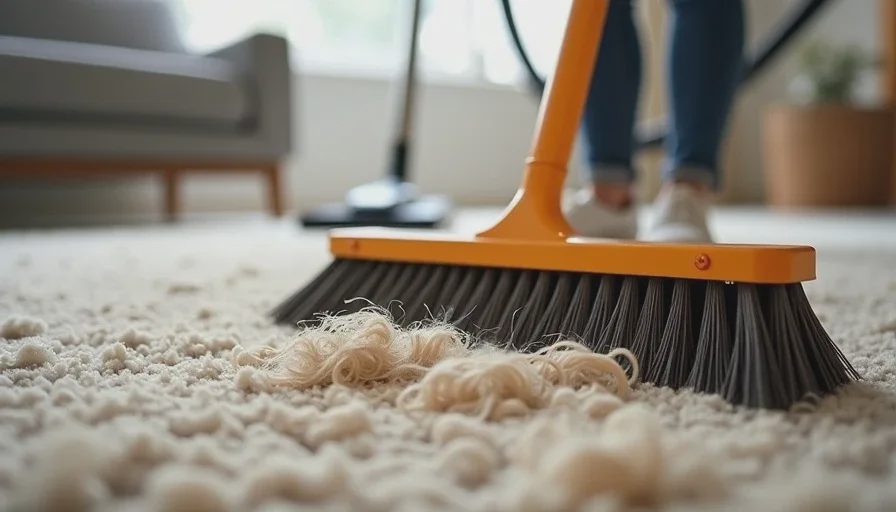
✅ 4. Rubber-Bristled Broom
Why it works: It pulls embedded hair out of carpet and upholstery far better than a vacuum alone. You'd be shocked how much hair comes up after you've already vacuumed.
What I buy: A basic rubber broom—no fancy brand. About $15 and mine has lasted two years.
How I use it: Short, firm strokes in one direction. Then vacuum up the pile.
✅ 5. Reusable Lint Roller (Sticky-Sheet Style)
Why it works: For quick touch-ups on clothes, the couch, and the car seat before guests arrive.
What I buy: A washable or refillable roller. I stopped buying the disposable ones—they generate a shocking amount of waste.
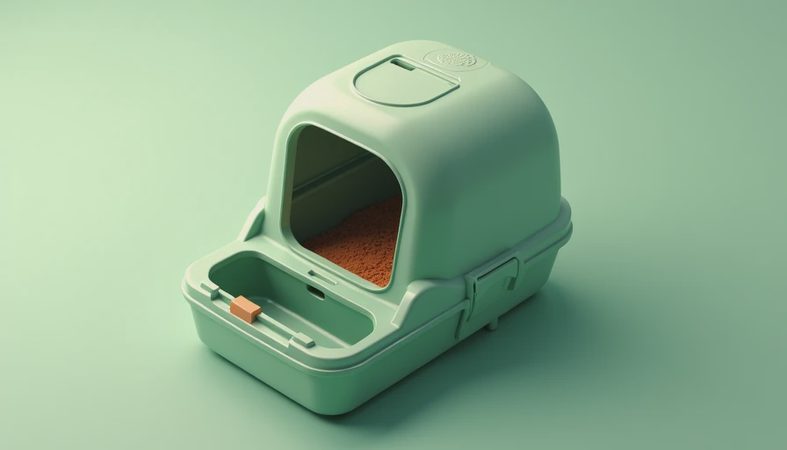
✅ 6. Unscented Clumping Cat Litter + A Good Scoop
Why it works: Unscented, because cats reject scented litter. Clumping, because it makes daily scooping fast. And a metal scoop—the plastic ones crack.
What I buy: Unscented clumping litter in the largest bag, plus a metal scoop with a long handle. I also keep a litter mat under the box, which catches about 80% of tracked litter.
How I use it: Scoop twice a day (morning and evening). Full litter change every 2–4 weeks depending on the box. Wash the box with unscented soap between changes—not bleach, which cats hate.
✅ 7. Flat-Bottom Bucket or Small Caddy
Why it works: So I can carry everything to the mess instead of running back and forth.
What I buy: A cheap plastic caddy from the cleaning aisle. Mine holds the enzyme spray, a roll of paper towels, a few microfiber cloths, and a small bottle of vinegar. I grab it and go.
Pro tip: Keep one caddy fully stocked in the laundry room. It's the difference between "I'll deal with it later" and "it's handled in two minutes."
✅ 8. White Vinegar
Why it works: It's cheap, safe for most surfaces, and deodorizes without perfume. Diluted 1:1 with water, it handles everyday wipe-downs on hard floors, counters, and food bowls.
Important caveat: Vinegar does NOT work on urine residue. It can actually make the odor worse by adding acid to an already acidic compound. Use vinegar for general cleaning, enzyme cleaner for biological messes.
✅ 9. A Designated Laundry Hamper
Why it works: Pet bedding, towels, and cloths don't get mixed with family laundry. Everything in this hamper gets washed hot with a splash of vinegar.
What I buy: A simple mesh or plastic hamper with a lid, stored next to the washing machine.
✅ 10. Small Stainless Steel Bowl for Treats/Cleanup
Why it works: A tiny bowl for holding a damp cloth, or for soaking small items like collars and tags. Sounds trivial, but it keeps small cleaning tasks contained.
The Actual Cleaning Routine (What It Looks Like Week to Week)
Here's what this looks like in real life, not a fantasy version:
Daily (5 minutes):
Scoop the litter box.
Wipe the feeding station mat with a damp cloth.
Sweep or quick-vacuum the high-traffic area (entryway, kitchen).
Every Other Day:
Rubber broom the main rug, then vacuum.
Spot-check the couch and dog bed for hair.
Weekly (20 minutes):
Wash pet bedding and any dirty towels.
Wipe down bowls with hot soapy water.
Mop hard floors with diluted vinegar.
Full vacuum including under furniture edges.
As Needed:
Enzyme cleaner for any accident or vomit.
Lint roller before guests come over.
Deep carpet clean twice a year (rented machine or pro).
That's it. No twelve-step system. No products I have to special-order. Just a small kit and a short routine that I can actually keep up with on a Tuesday night.
The Cost Reality Check
Let me put numbers on this, because it's part of why I wrote this post.
What I spent in my first three months (the trial-and-error phase):
Scented sprays and candles: ~$60
Carpet powder: ~$15
Carpet shampooer: ~$180
Scented litter and deodorizers: ~$35
Gimmick brushes and squeegees: ~$40
Disposable puppy pads (multipacks): ~$50
Total: roughly $380.
What I spend now per year, with the real kit:
Enzyme cleaner (gallon): ~$30, roughly 3 gallons a year = ~$90
Microfiber cloths (replaced twice a year): ~$30
Paper towels (bulk, maybe more than average): ~$80
Rubber broom (one-time, lasts years): ~$15
Lint roller (one-time): ~$10
Litter (unscented, bulk): ~$180
Vinegar: ~$10
Total: roughly $415 per year for a household with a dog and a cat—and that includes litter.
Notice that number is barely higher than what I blew in three months on things that didn't work. The difference is that now everything works.
The Two Rules That Keep My Cabinet Clean
Rule 1: If It Doesn't Solve a Real Problem, It Doesn't Stay
Every six months, I open the cabinet and check for anything I haven't used. If it hasn't been touched in six months, it goes. That's how the steam mop and the squeegee left.
Rule 2: Buy the Refill, Not the New Bottle
Enzyme cleaner, vinegar, and litter all come in bulk formats. The small, pretty spray bottles cost three times as much per ounce. Buy the ugly gallon and refill your spray bottle. Your budget will thank you.
What I'd Tell a Brand-New Pet Owner
If you're standing in the pet aisle right now, overwhelmed by options, here's what I'd say:
Buy four things:
A gallon of enzyme cleaner.
A pack of microfiber cloths.
A rubber broom.
A metal litter scoop (if you have a cat).
That's your entire beginner cleaning kit. It will handle 95% of what you'll face in the first month. Everything else can wait.
Don't buy:
Anything with "odor eliminator" on the label that isn't enzyme-based.
Anything scented, for litter or otherwise.
Any gadget that promises to "instantly" remove hair.
A carpet shampooer. Not yet. Maybe not ever.
If I could reset that first month, I'd start with these four items and save the other $300 for the vet bill I didn't see coming. Because here's the truth: the best pet cleaning product isn't the fanciest one. It's the one you'll actually use, correctly, when it matters.
And when your dog throws up on the rug at 11 PM, you won't care about the packaging. You'll care that you have the enzyme cleaner, a towel, and enough patience to handle it.

Letters
No letters yet. Yours could be the first.