Cat diapers are one of those products most new cat owners do not expect to buy. Then an older cat starts having accidents, a recovering pet cannot control its bladder, or a kitten needs help staying clean. Suddenly, you are standing in a pet store comparing sizes while wondering whether you are making the problem worse. I learned this one the messy way: the product is not complicated, but the routine around it matters much more than the diaper itself.
When cat diapers can help
Cat diapers are designed to catch urine and feces when a cat cannot reliably use the litter box. Common situations include urinary or bowel incontinence, recovery after surgery, mobility problems, nerve-related issues, and some senior-care situations. They can also help during short periods of travel, although a carrier liner and planned bathroom breaks are usually better for a healthy cat that simply dislikes car rides.
A diaper should not be the first response to a sudden accident. If a normally reliable cat begins urinating outside the litter box, schedule a veterinary examination. Urinary tract problems, kidney disease, diabetes, constipation, arthritis, and stress can all change bathroom habits. A diaper can protect your couch, but it does not identify or treat the reason for the accident.
Think of cat diapers as a management tool, not a cure. They can make a difficult week more manageable while you follow a treatment plan or arrange additional care. They should not be used to ignore repeated straining, blood in the urine, vomiting, extreme lethargy, or an inability to urinate. Those signs need prompt veterinary attention.
Choosing the right style and size
Most disposable cat diapers use an adjustable hook-and-loop closure and an absorbent center. Reusable cloth versions usually cost more at first but can be washed and used repeatedly. Disposable diapers are convenient for overnight visitors, travel, or a short recovery period. Reusable diapers can make sense when a cat needs long-term support and you have a reliable laundry routine.
Measure around the narrow part of your cat’s waist, usually just in front of the back legs. Do not choose based only on weight because cats with similar weights can have very different body shapes. A diaper should sit securely without digging into the abdomen or restricting walking. You should be able to slide one or two fingers under the waistband. If the diaper twists, slips, or leaves deep red marks, the fit is wrong.
Tail openings are another practical detail. Some products have a fixed hole, while others allow you to adjust the opening. A hole that is too large can cause leaks, and one that is too tight can rub the tail. For a long-haired cat, gently trim excess fur around the area only if your veterinarian agrees and you can do it safely. Never cut close to delicate skin simply to make a product fit.
How to introduce a diaper without a wrestling match
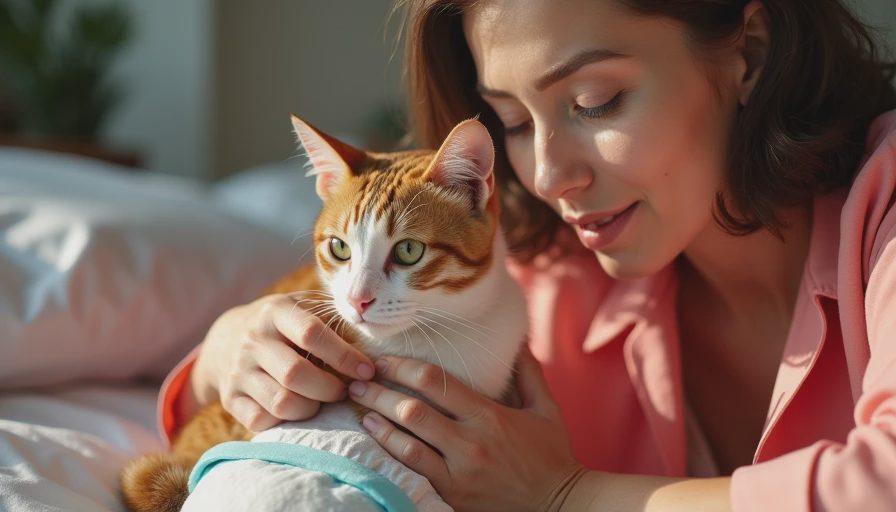
The first attempt should happen when your cat is calm, not after an accident when everyone is already frustrated. Put the diaper, treats, a towel, and cleaning supplies within reach. Let your cat sniff the diaper before you touch its body. Reward quiet behavior, then place the cat on a stable surface with one hand supporting the chest.
Slide the diaper under the belly and guide the tail through the opening. Fasten one side, check that the absorbent panel is centered, and then fasten the other side. Keep the first session short, perhaps two or three minutes. Offer a small treat and remove the diaper before your cat escalates into frantic scratching or biting. Repeat later and increase the time gradually.
Some cats adjust within a day. Others walk backward, flop onto the floor, or try to remove the diaper immediately. That does not mean your cat is being difficult; the sensation is unfamiliar. A snug fit, a calm room, and short practice sessions usually work better than holding the cat down. If your cat becomes distressed every time, ask your veterinarian about another management option.
Preventing leaks, odor, and skin irritation
Even the best cat diapers will eventually leak if they are left on too long. Check the diaper frequently at first so you can learn your cat’s pattern. Many owners start with a check every two to four hours during the day, then adjust based on output and the veterinarian’s instructions. A wet diaper should be changed promptly. A diaper containing feces should be changed immediately.
When changing it, gently clean the skin with warm water or a fragrance-free pet-safe wipe. Pat the area dry instead of rubbing. Moisture trapped against the skin can lead to irritation and painful sores. Avoid human diaper creams unless a veterinarian specifically approves one; some ingredients can be harmful if a cat licks them.
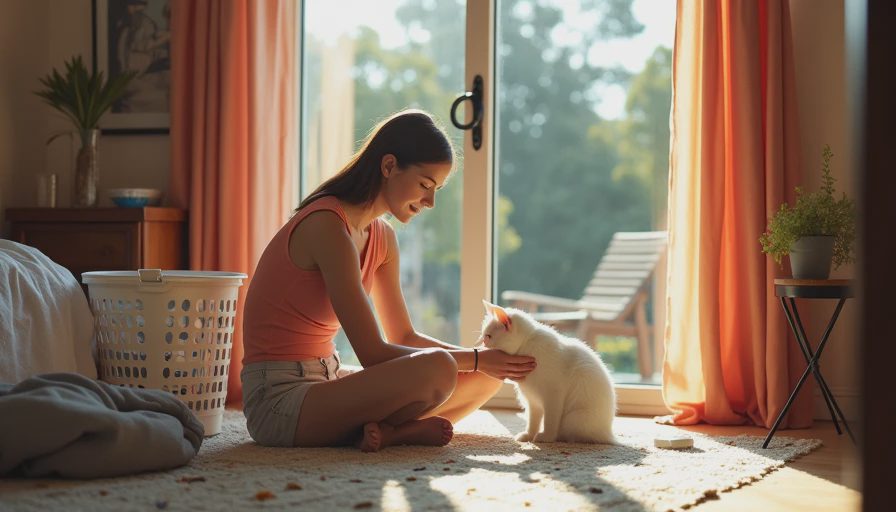
Place washable pads on favorite chairs, beds, and the floor near the litter box. I keep one towel basket beside the laundry room and a small sealed trash can near the cat’s supplies. This sounds overly organized, but it prevents the midnight search for a clean towel while a cat is standing on the rug.
A simple daily routine that actually works
Start each morning by checking the skin, changing the diaper, and offering a litter box opportunity without the diaper if your cat can safely manage it. Record roughly when the diaper was changed and whether it contained urine, stool, or both. You do not need a fancy app. A note on the refrigerator can reveal patterns that are useful at the veterinary appointment.
During the day, keep spare cat diapers, wipes, towels, disposable gloves, and plastic bags together in one labeled container. Buy a small package before ordering a large case because absorbency, sizing, and closure design vary between brands. If your cat needs diapers overnight, use a fresh one before bed and protect the sleeping area with a waterproof washable pad.
Give your cat supervised diaper-free time when practical. This allows the skin to dry and lets you see whether the cat can use the litter box. Keep the litter box low-sided and easy to reach if mobility is part of the problem. A second box near the cat’s resting area may reduce accidents more effectively than relying on cat diapers all day.
Common mistakes I would avoid now
The biggest mistake is fastening the diaper too tightly because you are afraid of leaks. Tightness does not fix a poor design or incorrect size; it creates rubbing and discomfort. Another mistake is waiting for a strong smell before changing it. By then, the skin may already be irritated.
Do not leave a diaper on an unsupervised cat that repeatedly chews or tears it apart. Swallowed material can create a serious problem. Also avoid using a dog diaper simply because it is available. The tail opening and body shape may not match a cat, and a loose fit can cause constant leaks.
I would also stop treating every accident as a training failure. A cat that is incontinent, painful, confused, or unable to climb into a box is not choosing to make your home harder. Clean the area with an enzymatic pet cleaner, adjust access, and focus on comfort. That shift made our household calmer immediately.
When to call the veterinarian
Contact your veterinarian if accidents begin suddenly, continue despite treatment, or come with increased thirst, weight loss, constipation, diarrhea, blood, crying, or repeated trips to the litter box. Ask how often the diaper should be changed, whether a barrier product is appropriate, and whether your cat needs scheduled diaper-free bathroom attempts.
Bring notes about timing, food and water intake, stool consistency, and any medication. If possible, take a photograph of skin irritation rather than making your cat endure a long appointment with a wet diaper. Your veterinarian can help determine whether cat diapers are appropriate for a short recovery period or part of a longer care plan.
The goal is not a perfectly spotless house. The goal is a cat who is comfortable, clean, and getting the right medical support, with a routine that your household can actually maintain. Start with the smallest workable setup, change often, and give both of you time to learn it. That is how cat diapers become one useful tool instead of another source of panic.
Letters
No letters yet. Yours could be the first.