When I brought home my first cat, I assumed any small toy from the pet aisle would be fine. That lasted until I found a shredded feather, a missing bell, and a very interested cat under the couch. Choosing cat chew toys is not difficult, but it does require a little more thought than grabbing the brightest package. The right toy can give your cat an appropriate outlet for biting, chasing, and exploring while helping you avoid loose pieces around the house.
Cats do not usually chew the way puppies do, and most chewing is connected to play, curiosity, teething, texture, or boredom. A kitten might mouth a toy because new teeth are uncomfortable. An adult cat might chew a rubber shape because it moves, smells interesting, or feels satisfying against the gums. The goal is not to make your cat chew on command. It is to offer safe options and notice what your individual cat actually enjoys.
What to Look for in Cat Chew Toys
Start with size and construction. A toy should be large enough that your cat cannot swallow it, but light enough to bat around the room. Avoid anything with pieces that pull away easily, including plastic eyes, tiny bells, glued decorations, long threads, and thin strips of rubber. If you can remove a part with two fingers and a little effort, your cat may eventually remove it with teeth and claws.
Good cat chew toys often include durable rubber shapes, textured dental toys made for cats, sturdy fabric kickers, and simple toys filled with catnip or silvervine. A textured surface can provide interesting mouth feedback, but “dental” does not mean a toy replaces brushing or veterinary dental care. Think of it as enrichment, not a medical treatment.
Inspect the package for age guidance and materials. Products made specifically for cats are generally a better starting point than dog toys, which can be too hard, too large, or designed for a stronger bite. I learned this one the messy way after offering my cat a small dog rubber ball that was practically impossible for her to grip. She ignored it completely, then chewed the cardboard shipping box instead.

Matching the Toy to Your Cat’s Habits
Watch what your cat already does before buying a basket full of products. If your kitten attacks shoelaces, choose a short, supervised kicker or a sturdy fabric toy rather than giving access to real laces. If your adult cat bites cardboard, try a corrugated chew pad or a firm paper-based toy with no staples, tape, or plastic coating. If your cat loves chasing, a chew toy that also rolls or skitters may be more appealing than a stationary object.
Some cats prefer soft plush textures. Others want something firm and ridged. A cat that ignores an expensive toy is not necessarily difficult; the texture, movement, or scent may simply be wrong. Cat chew toys work best when they fit an existing preference instead of trying to create an entirely new one.
Rotate two or three toys at a time. Keep the rest in a labeled basket and switch them every few days. This costs nothing and can make an old toy feel new again. I use a small storage bin beside the sofa, but the important part is keeping toys off the floor when they are not being used. That makes damage easier to spot and prevents the household from becoming a minefield of plastic mice.
Safety Rules That Actually Matter
Supervision is especially important with string, ribbon, wand attachments, feathers, and anything with elastic. These toys can be excellent for interactive play, but they are not good unattended chew toys. Put them away after the game. A cat swallowing string can develop a serious intestinal problem, so contact a veterinarian promptly if you suspect ingestion rather than waiting to see what happens.
Check cat chew toys every few days for cracks, frayed seams, exposed stuffing, missing parts, and sharp edges. Replace a toy when the damage is more than cosmetic. A $6 replacement is cheaper than an urgent appointment caused by a swallowed fragment. Wash washable toys according to their instructions and discard anything that remains damp, moldy, or strongly contaminated after cleaning.
In a home with children, store toys separately from craft supplies and small building pieces. Kids may not recognize that a bead or rubber charm is dangerous for a cat. I also keep dog toys in a different bin because our dog’s stronger chewing can damage products that are still safe for the cat. Separate storage sounds fussy until you are searching the floor for a missing plastic piece.
Building a Simple Chewing and Play Routine
You do not need an elaborate enrichment schedule. Try five to ten minutes of active play before a meal, then offer a safe toy for independent exploration. This sequence often works because a cat can stalk, chase, catch, and then settle down to eat. For a kitten, several short sessions are usually easier than one long session that ends with overstimulation and ankle attacks.
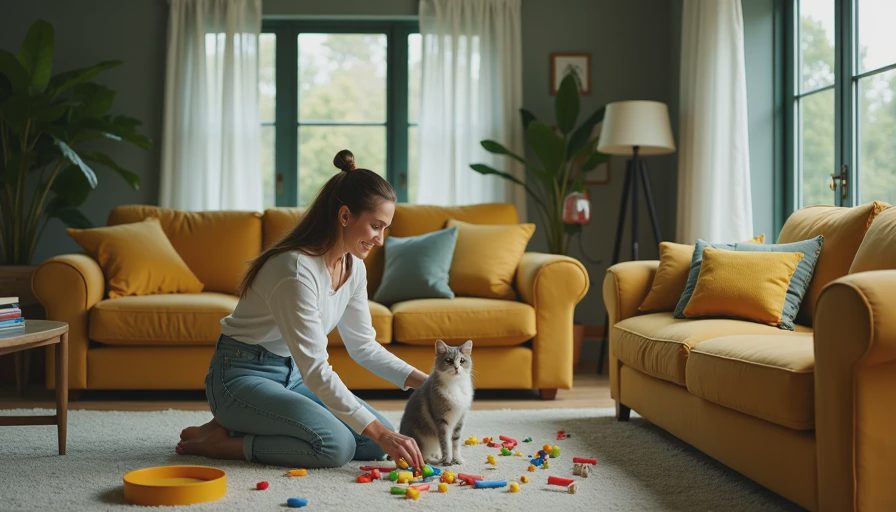
Place one or two cat chew toys near the areas where your cat already plays, such as beside a cat tree, under a coffee table, or near a window perch. Do not put every toy in the middle of the room. Strategic placement makes the item easier to discover and gives your cat something appropriate to investigate when you are answering emails or making dinner.
If your cat chews cords, move the cords first. Use cable covers, unplug devices when practical, and block access behind furniture. Then redirect the cat to a toy with a similar appeal, such as a textured rubber item or a short fabric kicker. Replacing a dangerous habit takes management and repetition, not scolding. Punishment can make a cat hide the behavior without changing the reason behind it.
When Chewing Deserves Extra Attention
Occasional chewing is usually part of normal exploration, but sudden or intense chewing deserves a closer look. Mouth pain, gum irritation, stress, boredom, and gastrointestinal issues can all affect behavior. Watch for drooling, bad breath, pawing at the mouth, trouble eating, vomiting, weight loss, or a clear change in energy. Those signs call for a veterinary conversation rather than another shopping trip.
A cat that repeatedly eats fabric, plastic, or other nonfood items may have pica or another health or behavior concern. Do not assume a new toy will solve it. Remove tempting objects, make the home safer, and record when the behavior happens. Notes about meals, household changes, and the specific items being chewed can help a veterinarian see a pattern.
Stress can also show up as destructive chewing. A move, new baby, visiting dog, schedule change, or conflict between cats may leave an animal unsettled. Add predictable meals, hiding spaces, vertical perches, and brief play sessions while you work out the bigger issue. A calmer environment often makes toy training easier.
How to Shop Without Wasting Money
Start with a small trial: one textured toy, one soft kicker, and one interactive option that you can supervise. Spending $10 to $25 lets you learn your cat’s preferences before buying a large multipack. Read reviews for reports about seams and pieces coming loose, not just whether cats appear excited in product photos.
Brands such as KONG, Petstages, and Yeowww! offer cat-focused options, but no brand works for every animal. A less expensive toy can be a great choice if it is sturdy, appropriately sized, and easy to inspect. Avoid buying based only on labels such as “indestructible.” No cat toy is truly indestructible, and marketing language cannot replace regular checks.
If I could reset the first month, I would buy fewer cat chew toys, rotate them more consistently, and supervise anything with strings or feathers every time. Watch your cat, choose simple construction, and replace damaged items quickly. That small routine keeps play interesting without turning your home into a warehouse, and it gives your beginner cat care plan one less problem to solve.



Letters
No letters yet. Yours could be the first.