If you have watched your cat sprint across a dark hallway without hitting a chair, you have probably wondered: can cats see in the dark? The short answer is no, not in complete darkness. Cats see extremely well in very low light, though, which makes an ordinary living room look much brighter to them than it does to us. Understanding that difference helps you set up a safer, calmer home instead of assuming your cat has built-in night-vision goggles.
How cat night vision actually works
Cats have several eye features that give them an advantage after sunset. Their pupils can open much wider than human pupils, allowing more available light to enter the eye. They also have more rod cells in their retinas. Rod cells are specialized for detecting light and movement, so they help cats notice a toy sliding across a dim floor or a person moving near a doorway.
Cats also have a reflective layer behind the retina called the tapetum lucidum. It sends some light back through the retina, giving the eye another chance to use it. This is why a cat’s eyes can appear to glow when a flashlight or camera catches them. The reflection is useful, but it does not create light. If a room has absolutely no light, your cat cannot see objects any more than you can.
Their night vision comes with tradeoffs. Cats are better at noticing movement than reading fine detail, and they do not see color in quite the same way people do. A bright red toy may not look especially vivid to your cat, while its movement, shape, smell, and sound still make it interesting.

Can cats see in the dark inside your home?
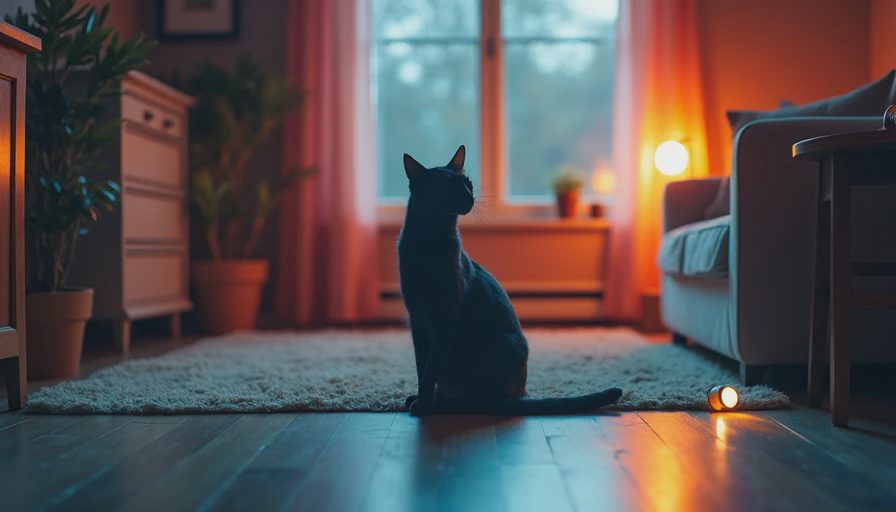
In most homes, “dark” really means low light rather than total darkness. Light from a streetlamp, a porch, a digital clock, or a window can be enough for a cat to navigate. This explains why your cat can find the water bowl at 2 a.m. while you are reaching for your phone and walking into the doorframe.
Still, good night vision does not make every room safe. Cats can trip over laundry baskets, slide on hardwood, or knock over a stack of boxes. A new cat may also be unfamiliar with the location of furniture and need time to map the home. I learned this one the messy way when I left a folding chair in the hallway overnight and found it tipped over beside the litter box the next morning.
A small plug-in night-light can help in high-traffic areas without turning the entire house bright. Place one near stairs, the litter box, or a food and water station. Choose a steady, soft light instead of a flashing product. You do not need to illuminate the house like a warehouse; you just need to remove confusing obstacles.
Should you leave a light on for your cat?
Most healthy cats do not need a light left on all night. Cats naturally sleep and wake in short stretches, and many are comfortable moving through a familiar home in low light. Leaving every lamp on can waste electricity and make it harder for people in the home to sleep, especially if the cat spends the night outside the bedroom.
A better approach is to create a predictable nighttime setup. Keep the litter box in the same accessible location, leave a clear path between sleeping areas and resources, and remove bags, cords, and unstable objects from the floor. If your cat is elderly, newly adopted, recovering from illness, or anxious in a new space, a dim night-light is a reasonable comfort measure.
Avoid using a bright light directly in your cat’s sleeping area. Cats need restful periods, and a constant overhead light can interfere with the calm environment you are trying to build. If your cat seems relaxed, eats normally, and navigates without bumping into things, the room is probably working well.
When poor vision is more than normal night behavior
Normal low-light behavior includes pausing at a doorway, using whiskers to investigate, or moving more slowly in an unfamiliar room. Sudden trouble navigating is different. A cat that begins bumping into furniture, hesitating on stairs, missing the litter box, or acting startled in familiar spaces could have a vision problem or another health issue.
Watch for visible changes too. Cloudiness, redness, swelling, unequal pupils, frequent squinting, discharge, or pawing at the eyes deserves a call to a veterinarian. Some conditions develop gradually, so you may notice behavior before you see an obvious eye change. Do not shine a bright flashlight into the eyes to test vision at home.
Older cats can also develop health problems that affect sight, including conditions associated with high blood pressure or diabetes. This does not mean every nighttime stumble is an emergency. It does mean a sudden or continuing change is worth taking seriously. A veterinarian can examine the eyes and look for underlying causes instead of leaving you to guess.
Simple ways to make nighttime safer
Start by walking through your home at your cat’s eye level. Look for loose cords, narrow gaps behind appliances, slippery rugs, and objects that could fall from a shelf. Secure tall furniture, especially if your cat climbs. Keep windows screened and close doors to garages, laundry rooms, and storage areas where chemicals or tools may be present.
Keep the litter box easy to reach and avoid placing it behind a closed door. If you have multiple floors, consider a box on each frequently used level. Put water somewhere your cat can reach without crossing a noisy appliance or a busy walkway. For kittens, block access to stairs until they are confident and coordinated.
If you rearrange furniture, give your cat a little time to adjust. Walk them through the new layout during the day, then leave familiar bedding or a toy near important locations. A stable setup is more helpful than expensive gadgets marketed as cat night-vision equipment.
What I would do differently as a first-time owner
At first, I assumed my cat could see perfectly at night because she appeared to patrol the house confidently. Then I moved a storage bin into the hallway and realized she was relying on memory, scent, whiskers, and the small amount of light coming through the windows. The mistake was mine, not hers.
If I could reset the first month, I would choose one quiet sleeping area, keep pathways open, and add one inexpensive night-light near the litter box. I would also spend a few evenings watching how my cat moved instead of guessing what she could see. That simple observation answered more questions than a pile of novelty products.
So, can cats see in the dark? They can see far better than people in low light, but they cannot see without any light at all. Give your cat a familiar layout, remove nighttime hazards, and pay attention to sudden changes in vision or navigation. Those small habits make a normal home easier to manage and help you notice when your cat needs professional care.

Letters
No letters yet. Yours could be the first.