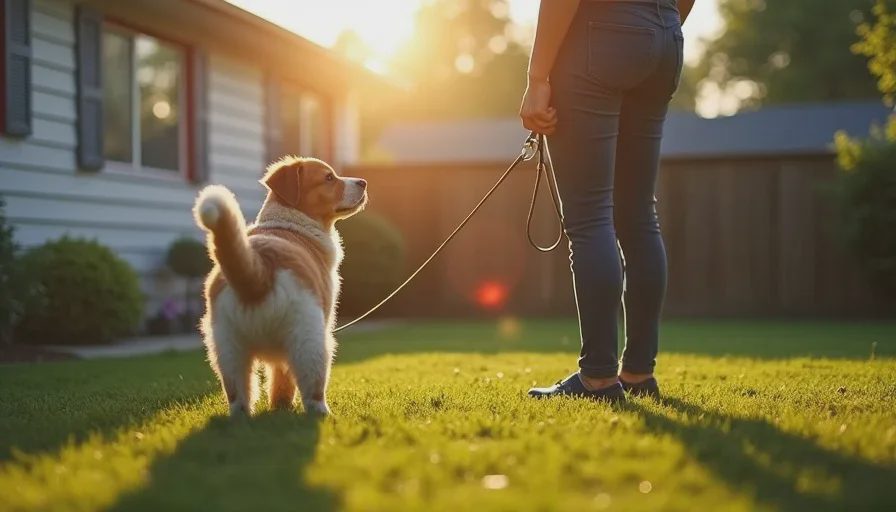
The moment I realized I was the problem, I was standing in my own backyard at 6:15 AM.
I had just called my dog to come inside. She looked at me, turned around, and trotted in the opposite direction—straight to the far corner of the yard, where she stood and stared at me like I was a stranger offering her a bath.
Which, to be fair, I was about to be.
In that moment it hit me: I had spent three weeks teaching her that "come" means "something bad is about to happen." Every time I called her, it was to put her leash on and leave the park. Or to go into the crate and be alone. Or to get her nails trimmed. Or to end whatever fun thing she was doing.
She wasn't ignoring me. She was making a very logical decision based on the evidence I'd given her.
I learned this one the messy way.
Here's the uncomfortable truth about training a new pet: you are always teaching something. Every interaction, every reaction, every moment of silence is a lesson. The question is only whether you're teaching the lesson you intended—or its exact opposite.
I did this six times. Not because I was careless, but because I was thinking about what I wanted instead of what my pet was learning.
Let's go through all six, because I'd bet money at least two of them are happening in your house right now.
Accidental Lesson #1: "Come" Means Something Bad
What you intend to teach: Come when called, every time, no matter what.
What you accidentally teach: Come = the fun is over. Come = I get grabbed. Come = scary things happen.
Why it happens:
Think about when you actually say the word "come" to your pet. Be honest.
You call them to leave the dog park.
You call them to put the leash on.
You call them to go in the crate.
You call them to give them a bath or clip their nails.
You call them to go to the vet.
You call them to stop doing something fun.
Meanwhile, when they're doing something they love—sniffing, playing, eating—you leave them alone.
So the math is brutal and simple: "Come" almost always predicts the end of something good or the start of something unpleasant. Why would any animal respond to that?
What to do instead:
Never call your dog to do something they hate. Walk over and get them instead. Save "come" for neutral or positive moments.
Call them constantly for no reason at all. Call, reward with a treat, then release them back to whatever they were doing. Do this 10 times a day. Nothing follows "come" except good things and freedom.
Practice calling them away from fun, then sending them back. At the park: call, treat, release back to play. Call, treat, release. Now "come" doesn't end the fun—it briefly interrupts it and then returns it.
Never punish a dog who actually came to you. Even if they took 10 minutes. Even if you're annoyed. If they came, they get rewarded. Punishing a dog who came to you is the single fastest way to destroy the cue forever.
My personal mistake: I used to call my dog to put her in the crate when I left for work. Every morning, "come" = abandonment. It took me weeks to undo that. Now I walk to her, put her in the crate calmly, and save "come" for walks, treats, and play.
Accidental Lesson #2: Yelling "Quiet" Teaches Barking
What you intend to teach: Stop barking.
What you accidentally teach: Barking gets a reaction from my human. Also, humans bark too, so I guess this is a group activity.
Why it happens:
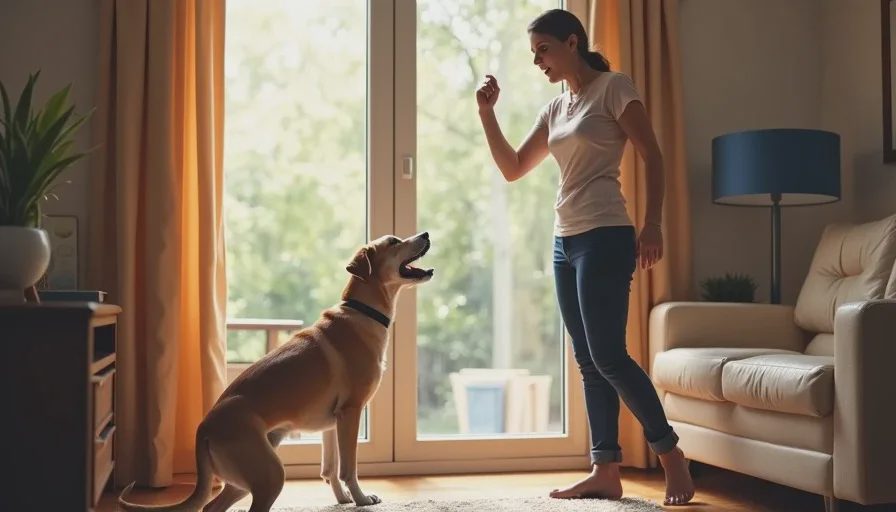
Your dog is barking. You're frustrated. So you say "quiet!" in a sharp, loud voice.
From your dog's perspective, they were making noise and then you also made noise. You joined in. To a dog, that can read as reinforcement—they barked, and you engaged. The barking got attention.
Worse: if you say "quiet" while they're still barking, you're marking the barking. If you say "quiet" and then they pause for a millisecond and then resume, and you yell again—you're marking the resume.
What to do instead:
Catch the silence, not the barking. Wait for even one second of quiet, then mark it ("Yes!") and reward. This is the hardest advice to follow because silence is what you want—but it's also the only moment worth rewarding.
Don't repeat the word. Say "quiet" once, calmly, and then wait. Repeating it teaches them that it's background noise.
Manage the trigger. If your dog barks at the mail carrier every day at 2 PM, close the blinds before 2 PM. Reduce the rehearsal of the behavior while you train.
Reward the alternative. Teach a behavior that's incompatible with barking—like going to their bed. Then reward that.
For cats, this is even more important. A cat who meows at 5 AM for food should get absolutely nothing—no talking, no eye contact, no movement—until the meowing stops. Attention is food to a cat.
My personal mistake: I spent two weeks yelling "quiet" at the mail slot before I realized the mail slot moment had become the best part of my dog's day. She barked, I came running and made noise, and then the mail arrived. I was running a very confusing morning show. Closing the blinds fixed 80% of it in three days.
Accidental Lesson #3: Taking Things Away Teaches Guarding
What you intend to teach: Drop it. Leave it. Share nicely.
What you accidentally teach: Anything interesting in my mouth will be stolen from me. I should hold on tighter, swallow faster, and guard my stuff.
Why it happens:
Your dog picks up a sock. You say "drop it!" and take it. Later, they find a chicken bone on the sidewalk. You pry their mouth open and remove it. Another time, they're chewing a chew toy and you take it away because it's time for a walk.
Over and over, the lesson repeats: when a human approaches what I have, I lose it.
The natural response to that lesson is either to run away with the item, to swallow it as fast as possible, or to growl when you come near. And then owners call that "resource guarding" as if it appeared out of nowhere.
What to do instead:
Trade, don't take. Offer something better than what they have. Cheese, chicken, a higher-value toy. When they drop the sock, they get the treat, and then—critically—they often get the sock back. This teaches that giving things up is profitable and safe.
Practice "leave it" as a game with low-stakes items. Put a boring treat in your closed hand. Wait for them to back off. Mark and reward with a different, better treat. Build up gradually.
Never make "drop it" the end of something good. If they drop their toy, toss it again. If they drop the ball, throw it. Give it back sometimes so the game continues.
Don't take things away for no reason. If they're happily chewing a legal chew toy, let them. Every unnecessary confiscation builds the case that you're a thief.
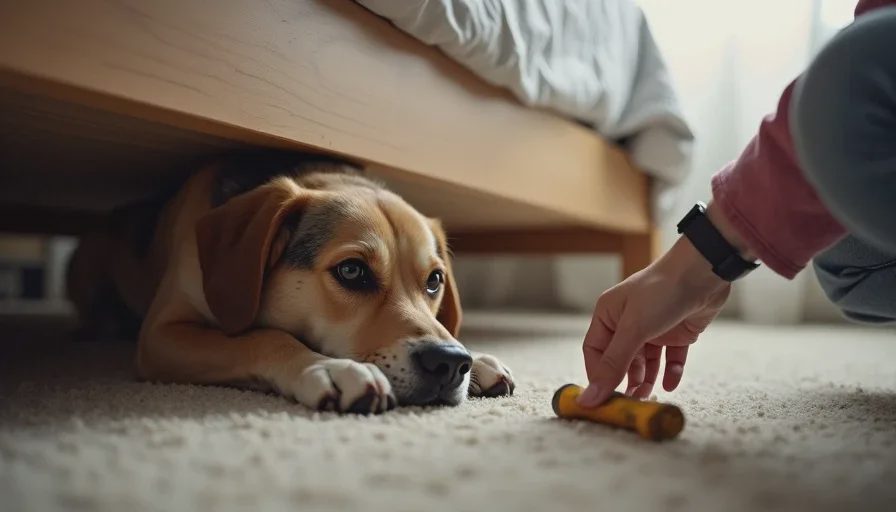
My personal mistake: I took my dog's chews away every time I needed her to do something else. Within a month, she was taking her chews under the bed to eat them in secret. She wasn't being sneaky. She was protecting her stuff from the person who kept stealing it.
Accidental Lesson #4: The Crate Becomes the Punishment Room
What you intend to teach: The crate is a safe, calm place. Crate training makes everyone's life easier.
What you accidentally teach: The crate is where I go when I'm bad. The crate is where I go when everyone leaves. The crate is a bad place.
Why it happens:
It's so easy to do this without realizing:
Dog gets overexcited and nips the kid → "Go to your crate."
Dog is underfoot during dinner → "Crate."
Dog barks at the mail slot → "Crate."
You're leaving for work → "Crate."
Dog has an accident → "Crate."
Now the crate is associated with: correction, isolation, and the moment you leave. Of course your dog hates it.
What to do instead:
Never use the crate for punishment. Ever. Not once. There are other ways to give a time-out, and the crate should stay neutral-to-positive in your pet's mind.
Feed every meal in the crate for the first few weeks. Door open, no pressure. Food in, dog in, food out, dog out.
Randomly hide high-value treats in the crate throughout the day. The dog discovers it's a magical place that produces cheese.
Use the crate when you're home, not just when you leave. Crate them for 10 minutes while you're in the next room, then let them out. This breaks the association between the crate and being abandoned.
Pair the crate with special things. A frozen stuffed Kong only happens in the crate. A specific chew only happens in the crate. Now the crate predicts something they want.
My personal mistake: I crated my dog the very first time she got overstimulated and knocked my daughter over. It was the correct instinct—separate them, give everyone a break—but I used the crate, and she started avoiding it for two weeks. I had to rebuild the whole association with cheese and meal-times. Learn from me: send them to a separate room, not the crate.
Accidental Lesson #5: Accidents Get Attention, Success Gets Silence
What you intend to teach: Go potty outside.
What you accidentally teach: Potty inside = dramatic human reaction. Potty outside = nothing happens.
Why it happens:
This one is subtle and it took me embarrassingly long to see.
Here's what actually happens in most homes during house training:
Indoor accident: You gasp. You say "no!" You grab paper towels. You talk in a stressed voice. You clean up while muttering. Your pet watches the entire performance and learns: peeing in the house makes my human very interesting and interactive.
Outdoor success: Your dog goes potty outside. You're busy, or you're on your phone, or you're cold and want to go back in. You say "good" half-heartedly and head for the door. Your pet learns: peeing outside is boring and unnoticed.
Do this for two weeks and you've accidentally created a pet who prefers the rug. It's a stage, and they're the star.
Also worth saying: never rub your pet's nose in a mess or show them an accident that happened hours ago. They can't connect the correction to the act. All they learn is that you sometimes come home angry and unpredictable.
What to do instead:
Throw a party outside. The moment they finish, mark it ("Yes!") and give a high-value treat immediately. Cheese, chicken, whatever is special. Then a short happy walk. Outdoor potty should be the best 30 seconds of their day.
Keep indoor accidents boring. No shouting, no drama, no eye contact. Clean it up silently with enzyme cleaner. Neutral face. Neutral voice.
Set them up to succeed. Take them out every 30 minutes for the first few days, and always after meals, naps, and play. You cannot reward what doesn't happen.
Keep a log. Write down every potty—time and location—for a week. Patterns emerge fast, and patterns make house training predictable instead of a guessing game.
My personal mistake: I was so busy managing the cleanup that I never rewarded the outdoor successes with anything better than a distracted "good girl." I fixed it in three days by keeping cheese in my pocket on every walk. She was house trained within a week after that.
Accidental Lesson #6: Hands Only Mean Business
What you intend to teach: Nothing—you're just living your life.
What you accidentally teach: A human reaching for me means something unpleasant is about to happen.
Why it happens:
Add up every time you touch your pet in a day and ask what it led to:
Grab the collar → leash → leaving the park.
Pick them up → bath.
Grab a paw → nail trim.
Hold the mouth open → pill.
Reach for them under the bed → dragging them out for the carrier.
Approach while they're eating → taking the bowl away.
If most physical contact in your pet's life is instrumental—meaning you're touching them because you need them to do something—they learn that hands are tools, not affection. Then you get a pet who ducks away when you reach for them, or a cat who bolts when you stand up, or a dog who growls when you touch their collar.
Then, when you actually need to handle them in an emergency, you've lost your access.
What to do instead:
Do "nothing touches." Several times a day, walk up, touch your pet gently, and walk away. No leash, no bath, no task. Just neutral contact followed by nothing bad. Do it 10 times a day.
Practice handling for no reason. Touch paws, ears, mouth, tail. Reward. Then release. Nothing follows.
Pay for the collar grab. Reach for the collar, treat, release. Do this 20 times over a week, and your dog will start leaning into your hand instead of ducking away. This one change made vet visits and leash-ups dramatically easier for us.
For cats: Same principle. Touch, treat, walk away. Never make every approach a prelude to the carrier or a nail trim.
Ask before you take. If they're eating, walk past, drop something better nearby, and keep moving. Don't prove to them that your approach means loss.
My personal mistake: For the first month, I only touched my cat when I needed to move her away from the dog, put her in the carrier, or clean her litter box area. She started associating my footsteps with inconvenience. I fixed it with a week of "touch, treat, walk away," and now she comes to me on her own.
The Pattern Behind All Six
Notice what these have in common:
In every case, the lesson I accidentally taught was the inverse of my intention—because I was focused on the behavior I wanted instead of the information my pet was receiving.
I wanted a strong recall, so I called them for unpleasant things.
I wanted quiet, so I made noise.
I wanted cooperation, so I took things.
I wanted a happy crate, so I used it as punishment.
I wanted outdoor potty, so I rewarded indoor drama.
I wanted a bond, so I only touched them when I needed something.
The fix for all six is the same three-word principle: Make the good thing easier than the bad thing.
Not louder. Not stricter. Not more gadgets. Just make the thing you want pay better than the thing you don't.

Letters
No letters yet. Yours could be the first.