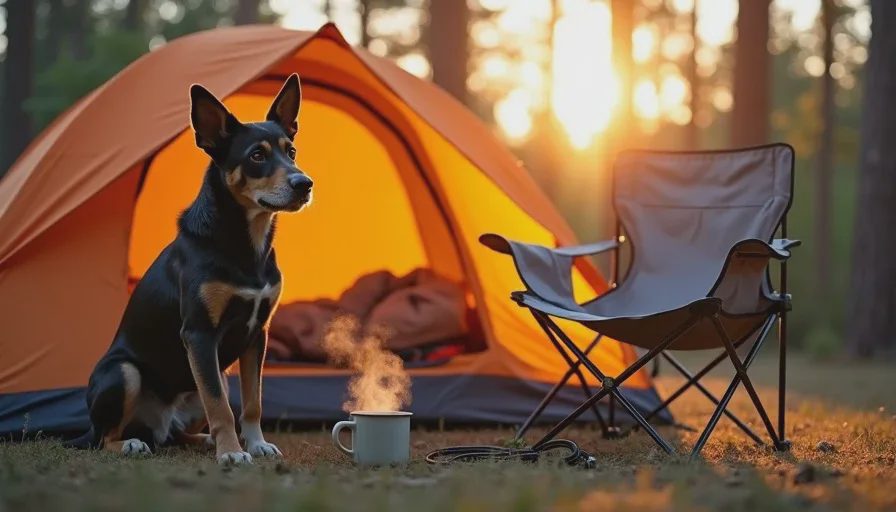
I have a photo from our first camping trip that makes me laugh every time I look at it.
In the photo, my dog is sitting beside our tent at golden hour, ears perked, head tilted, looking like the cover of an outdoor magazine. Behind her, pine trees. In front of her, a perfectly arranged camp chair and a steaming mug of coffee.
What the photo doesn't show:
The 45 minutes I spent trying to get her out of the car because she refused to step onto gravel.
The moment she lunged at a chipmunk and nearly pulled me into the fire pit.
The 2 AM pacing session where she walked circles inside the tent, panting, while I lay there pretending to sleep.
The fact that we packed up and drove home at 6 AM, fourteen hours earlier than planned.
I learned this one the messy way.
Here's what nobody tells you when you search "pet‑friendly campgrounds near me": pet‑friendly does not mean pet‑ready. It means pets are allowed. It says nothing about whether your pet is prepared—and if your pet is still new to everything, that distinction matters more than you'd think.
If you're dreaming of camping with your new dog or cat this season, I'm not going to tell you not to go. I'm going to tell you the truth about what you're signing up for, and how to do it in a way that doesn't end with you crying into a cold campfire at dawn.
First, Let's Talk About What "Pet‑Friendly" Actually Means
When a campground markets itself as pet‑friendly, it usually means:
Pets are allowed on the property.
There may be a designated walking area.
There might be a pet fee.
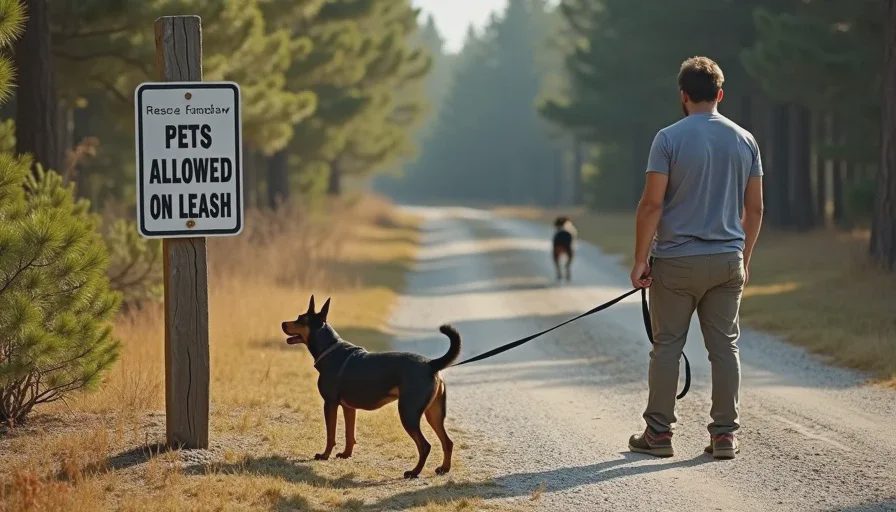
There are likely leash rules (usually 6 feet or less).
What it does not mean:
That the terrain is safe for paws (gravel, hot sand, sharp rocks, burrs).
That other campers' dogs will be under control (off‑leash dogs are everywhere, rules or not).
That there's shade, water access, or a place to escape the heat.
That your site is far from roads, wildlife, or loud generators.
That your pet will be comfortable there.
That last one is the big one. A campground can be perfectly pet‑friendly on paper and still be a terrible fit for a pet who's only been in your home for three weeks.
Mistake #1: We Went Too Soon
We brought our rescue dog home in early spring and booked a camping trip for six weeks later.
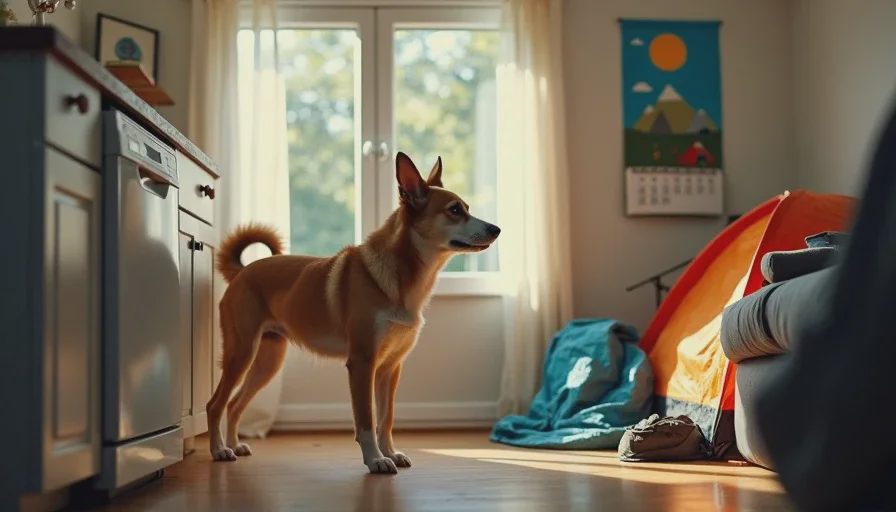
In my head, six weeks was plenty of time. In reality, six weeks is nothing. At that point, she still startled at the dishwasher. She still paced at night. She still hadn't fully learned that our house was safe. And I decided to take her into the woods.
Here's my honest rule now: Don't take a brand‑new pet camping until you've had them for at least three months—preferably six—and until they've mastered a few basics at home.
Specifically, you need:
A reliable recall (coming when called, even with distractions).
A solid "leave it" (for dropped food, dead things, wildlife).
Comfortable loose‑leash walking (not perfect, but not dragging you).
The ability to settle in a new place (not pacing for hours).
A predictable routine at home that you can adapt outdoors.
If your pet can't do those things in your living room, they won't magically do them in a forest full of new smells and sounds.
This is where I overestimated myself. I thought love and a nice tent would be enough. It wasn't.
Mistake #2: I Chose the Campsite From Photos
I picked our site based on Instagram‑worthy photos: a clearing near a creek, surrounded by trees, "secluded and peaceful."
What the photos didn't show:
The site was a 10‑minute walk from the parking lot, and we had to carry everything—including a nervous dog.
"Near a creek" meant the ground was damp, muddy, and full of burrs that lodged in her paws.
"Secluded" meant no other campers nearby—which also meant no other dogs, no distraction, and no buffer when she heard a noise at 1 AM and panicked.
There was no shade after 10 AM, and it hit 85 degrees by noon.
The nearest road was 200 yards away, and we could hear trucks all night.
What I'd check next time—before booking:
Distance from parking to site. Can you carry your gear and manage a leashed pet at the same time?
Ground surface. Dirt, grass, gravel, or sand? Hot sand and sharp gravel are paw hazards.
Shade availability. Especially midday. Dogs overheat fast.
Proximity to other sites. Some buffer is good, but total isolation can spike anxiety.
Water access. Is it safe for your pet to drink, or will you need to bring your own?
Wildlife warnings. Bears, raccoons, skunks, porcupines—call the ranger station and ask.
Road noise. Ask specifically. "Secluded" often isn't.
Also—and this one matters—call ahead and ask about off‑leash dogs. Many campgrounds have leash rules that nobody enforces. If your pet is reactive or nervous, an off‑leash dog running up at you is a nightmare scenario.
Mistake #3: We Tried Too Many New Things at Once
On that first trip, my dog experienced all of these for the first time in a single 36‑hour period:
Sleeping in a tent.
Sitting by a fire.
Hearing an owl.
Smelling a campfire.
Walking on gravel.
Seeing a deer.
Being tied to a stake.
Sleeping outside.
Being away from home overnight.
Looking back, that's absurd. I wouldn't want to do nine new things in one day, and I'm a human who understands what's happening.
The fix: Introduce one new thing at a time, at home, before you ever leave.
Pitch the tent in your backyard and eat dinner in it.
Sit by a fire pit in the driveway for 20 minutes.
Practice tethering to a stake in your yard.
Sleep outside in the tent one night, with the house right there as a backup.
We did none of that. So she walked into the woods with zero context, and every single thing was terrifying.
Mistake #4: I Brought the Wrong Gear (and Forgot the Right Stuff)
I packed like a human who was going camping. I did not pack like a person bringing an anxious animal into the wilderness.
What I brought that didn't help:
A cute but flimsy tie‑out stake that she pulled out of the ground in 30 seconds.
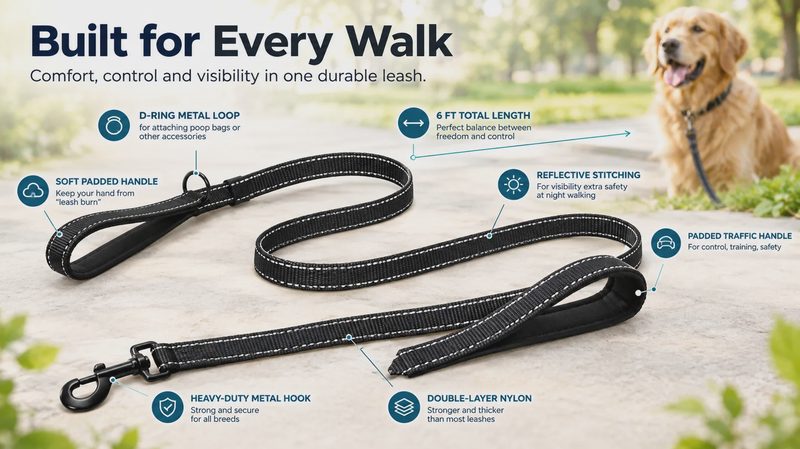
A thin nylon leash that cut into my hand when she lunged.
A collapsible bowl that tipped over every time she drank.
Zero paw protection.
Zero first‑aid supplies for the dog.
Her regular food—which she refused to eat in the new environment.
What actually saved us (once I figured it out):
A long‑line leash (15–30 feet) plus a 6‑foot fixed leash. The long line let her explore a bit while staying safe; the short leash for walks and around the fire.
A heavy‑duty screw‑in stake with a cable tie‑out, or a cable run between two trees. Much more secure than a flimsy stake.
A flat‑bottom, weighted water bowl that doesn't tip.
Paw wax or booties if the ground is hot or rough.
A dog‑specific first‑aid kit: gauze, vet wrap, tweezers (for ticks and burrs), styptic powder, Benadryl (ask your vet for dosing), and a copy of your vet's number.
A few days of their regular food, plus a high‑value treat they'll actually eat when stressed.
Their bed and a worn t‑shirt of yours for scent comfort.
A spare towel (or three).
A crate or portable pen so they have a familiar "home base" in the tent or under the awning.
Pro tip: Bring more water than you think you need. A stressed, panting dog drinks a lot, and campground water may not be available or safe.
Mistake #5: I Assumed the Dog Would Sleep
I genuinely thought she'd be exhausted from the fresh air and pass out.
Instead, she paced. She panted. She whined. She got up every 40 minutes to check the tent walls. Every sound—a branch, an owl, a distant car—triggered a low growl. At 2 AM, she finally settled—and then a raccoon knocked over our cook pot and we started all over again.
What I'd do differently:
Do a backyard test night first. If they can't sleep in a tent 30 feet from your house, they can't sleep in a forest.
Bring the crate. I resisted this because it felt like "giving up" on the outdoor experience, but a covered crate inside the tent is a game‑changer. It's a familiar den in an unfamiliar place.
Play white noise. Yes, really. I now download a rain‑sounds track and play it on low from my phone. It masks the startling noises.
Keep the bedtime routine identical. Same evening walk, same last potty break, same quiet wind‑down. If you change everything, expect them to be confused.
Lower your sleep expectations. Even with preparation, your first night might be rough. Plan for it. Don't schedule a hike at 7 AM.
Mistake #6: I Didn't Have an Exit Plan
This is the one I'm most embarrassed about. I never thought about what we'd do if it went badly.
We were an hour from the nearest town, with no cell service, and a dog who was clearly miserable. When I finally admitted at 5 AM that we should leave, we had to break camp in the dark, in the cold, with a panicked dog, and drive home on three hours of sleep.
What everyone should do before they go:
Check cell service at the site. If there's none, tell someone where you are and when you'll be back.
Know the nearest 24‑hour vet to your campsite, and save the address and number in your phone before you lose service.
Book a site within 90 minutes of home for your first trip. If it goes badly, you can be home before lunch.
Have a bail‑out plan. Know that leaving early is not failure. It's good judgment.
Don't be the last one to admit it's not working. If your pet is distressed for more than an hour or two, that's your signal.
Leaving early isn't a failed trip. Forcing your pet through 48 hours of misery so you don't "waste the reservation" is the actual failure.
A Word on Cats (Because I Have One)
We have never brought our cat camping. And I want to be honest about why: she doesn't enjoy it, and there's no upside for her.
Cats can camp—there are harness‑trained adventure cats out there who genuinely seem to love it. But that's the result of months or years of slow conditioning, starting at home, in the harness, in the carrier, in the car, in the yard, and eventually outside.
For a cat who's still new to your house? Absolutely not. Bringing a recently adopted cat to a campsite is likely to end in a lost cat—and cats who bolt in unfamiliar wilderness rarely come back.
If you want to travel with a cat, start with car rides to nowhere, then a harness in the living room, then the backyard, then a patio, then maybe a quiet campsite in an RV or a hard‑sided camper. That's a multi‑month project, not a weekend plan.

Letters
No letters yet. Yours could be the first.