I have a box in my garage labeled "The Graveyard."
It contains a retractable leash that snapped. A collapsible bowl that tipped over every time my dog drank. A tie-out stake that pulled out of the ground in under thirty seconds. A soft-sided cat carrier with a zipper my cat unzipped from the inside. A pair of dog booties that flew off into a creek. A poop bag dispenser whose clip broke on the second walk. And a "waterproof" blanket that was, in fact, not waterproof.
I estimate I spent about $340 on gear that failed before I found the version that worked.
I learned this one the messy way.
Here's the thing about gear reviews: almost nobody writes them after the product has failed. They write them in the first week, when everything still seems fine. Nobody posts: "Update: this leash snapped at month four while my dog was lunging at a squirrel." But that's the review you actually need.
So this is a different kind of gear post. Every single item below failed us first. I bought the cheap version, the popular version, or the version with great reviews. It broke, leaked, slipped, or scared my pet. Then I bought something else—and that something else has held up for years.
These are the only outdoor products I recommend, and I recommend them because of the failure that led me to them.
Gear #1: The Leash (Retractable → Fixed)
What I bought first: A retractable leash with a 16-foot cord and a brake button.
How it failed:
My dog lunged at a squirrel and the cord sliced across the back of my leg, leaving a welt.
The brake didn't engage fast enough when she bolted toward the street.
The cord went slack and got wrapped around her leg during a walk, which terrified her.
On a camping trip, the locking mechanism jammed and the leash was stuck at full extension.
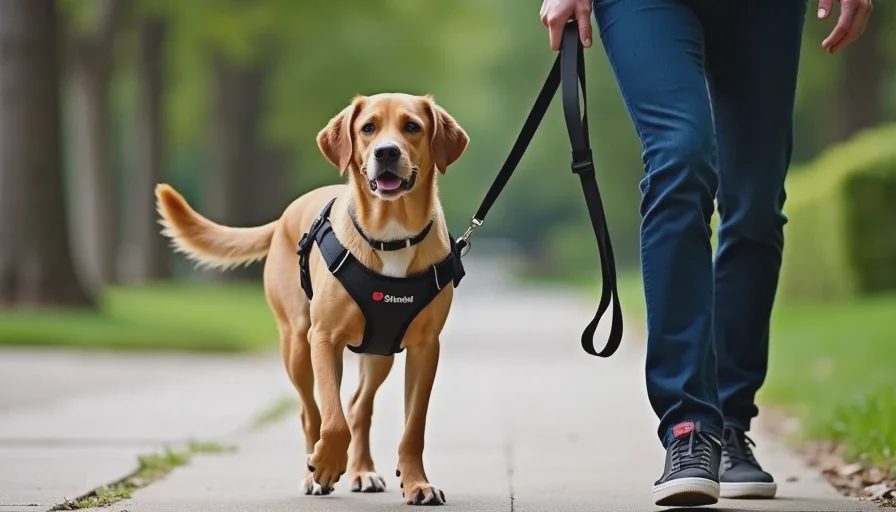
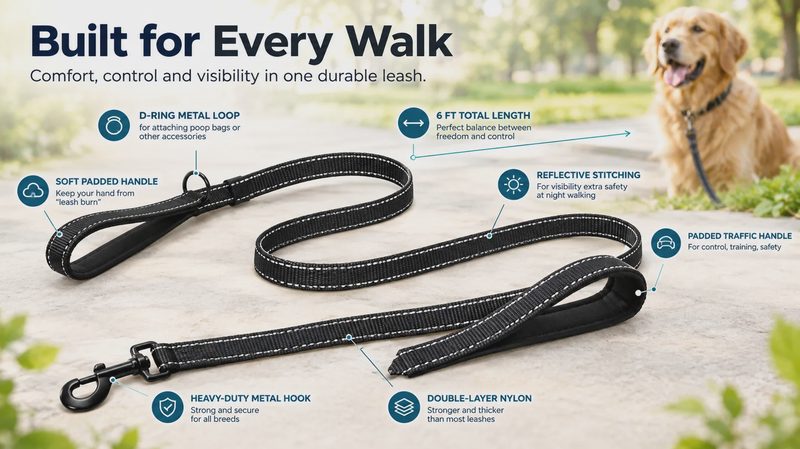
The replacement: A basic 6-foot fixed nylon leash with a padded handle.
Why it works:
I have immediate, total control. No cord to slice, no brake to fail, no locking mechanism to jam.
A padded handle means no rope burn when she pulls.
When it gets muddy, I throw it in the wash.
What I bought for camping: A 15-foot and a 30-foot long line, made of biothane or sturdy webbing, with a handle at the end. Long lines give a dog sniffing freedom at a campsite without the risk of going off-leash. The first one I bought was a cheap rope that burned my hands; the biothane version doesn't absorb water or mud.
What I'd tell a beginner: Skip retractable leashes entirely for the first year. They're dangerous, they teach pulling, and they break at the worst possible moment. Get a 6-foot leash and a long line. That's the whole setup.
Gear #2: The Harness (Back-Clip → Front-Clip)
What I bought first: A basic back-clip harness that looked comfortable and cute.
How it failed:
My dog learned to pull into it. A back-clip harness actually encourages pulling because the pressure is on the chest, which is where sled dogs pull from.
During a lunge at a passing dog, she slipped backward out of it and was briefly loose on a sidewalk.
The replacement: A front-clip harness with a martingale loop (the kind where the leash attaches at the chest).
Why it works:
When she pulls, the front clip turns her body toward me instead of letting her drag forward.
The martingale loop tightens slightly if she tries to back out, so escape is nearly impossible.
She actually walks better on it, which makes walks more pleasant for both of us.
What I'd tell a beginner: If your dog pulls, don't buy a prong collar or a choke chain. Buy a front-clip harness and spend two weeks teaching loose-leash walking. The gear helps; the training does the work.
Gear #3: The Tie-Out Stake (Flimsy → Heavy-Duty)
What I bought first: A spiral metal stake with a 10-foot cable, from a big-box store. About $18.
How it failed:
On our first camping trip, my dog hit the end of the cable while chasing a chipmunk. The stake popped out of the ground, spun through the air, and barely missed her head.
I spent the rest of the trip holding the leash, because I didn't trust the stake anymore.
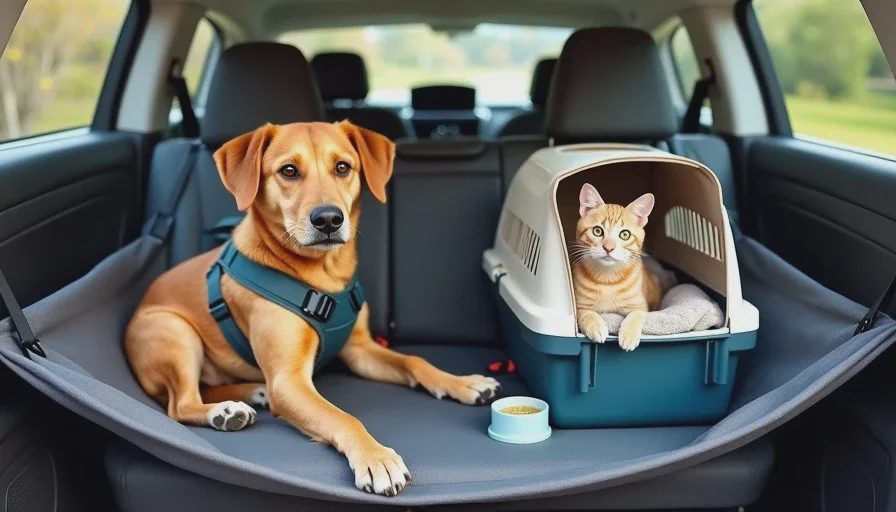
The replacement: A heavy-duty screw-in stake with a wider, longer auger and a swivel ring, paired with a coated steel cable (not a chain, which tangles).
Why it works:
It screws deep into the ground and holds even under a hard pull.
The swivel prevents the cable from twisting into a knot.
The coated cable doesn't rust and doesn't cut into my hands.
What I'd tell a beginner: If you camp or spend time outside with a dog, do not buy the cheapest stake. The stake's job is to hold your dog. Buy the one that's rated for a larger dog than yours, and test it at home before you rely on it.
The alternative I also recommend: A cable run between two trees if you have the right trees. It gives a dog more freedom to move around the campsite without tangling.
Gear #4: The Travel Water Bowl (Collapsible → Weighted Flat-Bottom)
What I bought first: A silicone collapsible bowl. It was light, packable, and came in a nice color.
How it failed:
Every time my dog drank, she stepped on the edge and dumped the water.
The silicone absorbed smells and started to get a funky odor, even after washing.
On a car ride, it slid under the seat and I couldn't reach it.
The replacement: A flat-bottom, weighted, wide-base bowl with a rubber grip on the bottom.
Why it works:
My dog can't tip it, even when drinking enthusiastically.
The wide base makes it stable on uneven ground—grass, gravel, dirt.
It doesn't absorb odors.
What I bought for the car: A spill-proof bowl designed for travel with a rubber gasket around the rim. It's not fully spill-proof, but it handles a few bumps without flooding the back seat.
What I'd tell a beginner: Buy one for home, one for the car, and one for camping. Keep them in the same bag so you always have them.
Gear #5: The Crate / Carrier (Soft-Sided → Hard-Sided)
What I bought first for the cat: A soft-sided carrier with mesh panels and a zipper.
How it failed:
My cat unzipped the top from the inside during a car ride and was loose in the car.
I had to pull over on the highway and catch her between the seats.
The mesh was also too flimsy—I could see it bulging when she pushed against it.
The replacement: A hard-sided plastic carrier with a top-loading door.
Why it works:
There's no way for a cat to open it from the inside.
The top-loading door makes it easier to lower a nervous cat in without a wrestling match.
The hard sides feel safer for her—she can't see through the mesh to the passing world, which reduces stress.
It's easy to clean if there's an accident.
What I'd tell a beginner: For cats, hard-sided, top-loading, always. For dogs, a wire crate for the house and a crash-tested crate or harness for the car. Don't cheap out on carriers—they're the difference between a safe pet and a lost one.
Gear #6: The Car Restraint (Loose in the Back Seat → Crash-Tested Harness)
What we did first: Let the dog ride loose in the back seat with a blanket.
How it failed:
On a hard brake, she slid off the seat and hit the back of the front seat.
She paced constantly, which made her anxious and made driving stressful.
She tried to climb into the front seat twice.
The replacement: A crash-tested car harness that clips into the seatbelt buckle.
Why it works:
She can sit or lie down, but can't climb into the front seat or get thrown off the seat.
It gives her enough movement to be comfortable without enough to be unsafe.
She settles faster in it because she's not sliding around.
What I also recommend: A back-seat hammock for the dog and a covered crate for the cat. The hammock creates a stable surface and catches drool, mud, and hair. The covered crate gives the cat a dark, quiet space.
What I'd tell a beginner: Never let your pet ride loose in the car. An unrestrained dog becomes a projectile in a crash—and can injure you as well as themselves. Get a crash-tested harness or a secured crate before your first road trip.
Gear #7: The Poop Bag Holder (Clip-On → Carabiner + Bulk Bags)
What I bought first: A cute clip-on dispenser with a matching bag roll.
How it failed:
The clip broke on the second walk.
The bags were thin and tore easily.
The roll ran out at the worst possible moment and I had to improvise with a leaf.
The replacement: A small carabiner clip with a roll of thick, unscented bags attached directly to the leash handle.
Why it works:
The carabiner doesn't break, and it's easy to clip on and off.
The bags are thick enough to survive a full scoop.
When I run out, I just clip on a new roll.
What I'd tell a beginner: Don't buy a "cute" dispenser. Buy a carabiner and a bulk box of bags. Keep a roll on every leash and a spare in the car and in your bag.
Gear #8: The First Aid Kit (Piecemeal → Purpose-Built)
What we had first: A random assortment of bandages, gauze, and antibiotic ointment in a ziplock bag.
How it failed:
On a camping trip, my dog cut her paw on a rock. I had no vet wrap, no styptic powder, and no way to clean the wound properly.
I ended up driving 45 minutes to the nearest town to buy supplies.
The replacement: A purpose-built pet first-aid kit plus a few additions specific to my dog.
What's in it:
Vet wrap (self-adhesive bandage)
Sterile gauze pads
Medical tape
Antiseptic wipes
Styptic powder (for minor bleeding)
Tweezers (for ticks and burrs)
Tick key
Small scissors
Saline solution (for flushing wounds)
Benadryl (vet-approved dose for both pets)
A small syringe for oral meds
A copy of vaccination records
A card with the vet's number, after-hours number, and the nearest emergency vet at our destination
A small emergency blanket
Why it works:
It's organized in a water-resistant case, so I can find what I need in seconds.
It's small enough to fit in a daypack or glove box.
I've replenished it twice—each time after it saved us a wasted trip or a vet visit.
What I'd tell a beginner: Assemble this before your first trip. Not after your first injury. And ask your vet for the correct Benadryl dose by weight for each pet—it's one of the most useful items in the kit.
Gear #9: The Dog Booties (Cheap → Fitted)
What I bought first: A cheap set of booties from a big-box store. They came in a pack of four with a sizing chart.
How it failed:
Two flew off in the first ten minutes of a hike.
The third one slid sideways and made my dog walk oddly.
The fourth one got soaked and turned into a soggy sock.
The replacement: Properly fitted, velcro-secured booties from a company that makes them for working dogs.
Why it works:
The fit is specific to paw width and length, not just weight.
The velcro straps lock them in place—no slipping, no flying off.
They're designed for hot pavement, sharp rocks, and snow, which means they actually hold up.
What I'd tell a beginner: If your dog needs booties (hot pavement, rock, snow, salt), invest in the fitted ones. Cheap booties are worse than no booties—they slide off, they trip your dog, and you're constantly stopping to fix them. Also, condition your dog to wearing them at home before a trip. First-time booties on a hiking trail is not the moment to start.
Alternative: Paw wax for moderate conditions. It's not protection against hot pavement, but it helps with rough surfaces and cold.
Gear #10: The Outdoor Blanket (Waterproof Claim → Actually Waterproof)
What I bought first: A picnic blanket advertised as "waterproof" and "pet-friendly."
How it failed:
One muddy dog on top and the water seeped right through.
The bottom got damp from ground moisture.
It went into the washing machine once and the backing separated.
The replacement: A waterproof outdoor blanket with a rubberized or TPU backing and a machine-washable top.
Why it works:
The rubberized bottom actually blocks moisture.
The top surface is durable enough for claws and clean-up.
It folds small enough for a daypack or the car.
What I'd tell a beginner: Look for the words "waterproof backing" or "TPU membrane," not just "water-resistant." And test it at home before you trust it on a camping trip.
Gear #11: The Cooling Towel (For Hot Days)
What I bought first: A cheap cooling towel from a sporting goods store.
How it failed:
It dried out in 15 minutes and became useless.
It didn't stay cold long enough to matter on a hot hike.
The replacement: A proper evaporative cooling mat or vest designed for dogs.
Why it works:
The mat stays cool for hours and can be recharged in cool water.
My dog lies on it voluntarily in the shade, which means she actually uses it.
It folds flat for travel.
What I'd tell a beginner: If you hike or camp in warm weather, bring a cooling mat. A dog overheating on a trail is a medical emergency, and it happens faster than people expect.
Additional must-have for hot weather: A collapsible water bottle with a built-in dog bowl so you can offer water frequently without stopping to unpack.
The One Thing That Never Failed
Out of everything in the Graveyard, there's one category of item that has never let me down—and it's not a product at all.
Preparation.
Every single failure on this list happened because I bought quickly, trusted marketing, or assumed something would work because it worked for someone else. Every single replacement worked because I did the research, tested it at home, and bought for my pet's actual behavior rather than for the version of my pet I wished I had.
The leash that snapped failed because I wanted a long, fancy leash for aesthetic reasons. The tie-out stake failed because I bought the cheapest option. The carrier failed because I prioritized looks over function. The boots failed because I bought them the day before the hike.
If I could reset the first year, I'd spend less money and more time. I'd test gear in the backyard. I'd read one-star reviews. I'd ask other pet owners what actually held up. And I'd accept that the right gear for my dog is the gear that fits her, not the gear that looks best online.
The Graveyard Rules
If you're building your own outdoor kit, here are the rules I now follow:
1. Buy the second-best-looking option, not the best-looking one. The prettiest gear is often the most fragile. Function over aesthetic.
2. Read the one-star reviews first. They'll tell you how the product fails. The five-star reviews will tell you it arrived on time.
3. Test everything at home before you need it. Car restraints, harnesses, booties, cooling mats, long lines—all of it can be tested in your own yard or driveway.
4. Buy one item at a time, and replace only what fails. Don't stock up on gear before your pet has shown you what they need.
5. When something fails, pay attention to why. The failure tells you what feature to look for in the replacement. The retractable leash taught me I needed fixed. The stake taught me I needed heavier. The carrier taught me I needed hard-sided.
6. Never buy safety gear based on price. Harnesses, carriers, car restraints, and stakes should be bought for the worst-case scenario, not the everyday one.
The Beginner's Outdoor Kit (What I Actually Recommend)
If you're starting from scratch, here's the whole kit—the surviving items from a year of failures.
Everyday walks:
6-foot fixed leash with padded handle
Front-clip harness with martingale loop
Collar with current ID tag
Carabiner + thick poop bags
Small treat pouch
Car travel:
Crash-tested car harness (dog)
Back-seat hammock
Hard-sided top-loading carrier (cat)
Towel to cover carrier
Spill-proof travel bowl
Small bottle of water from home
Day trips:
Long line (15 or 30 feet, biothane)
Flat-bottom weighted water bowl
High-value treats
Small towel
Paw wax or fitted booties (seasonal)
Cooling mat (in warm weather)
First-aid kit
Camping and overnight:
Heavy-duty screw-in stake or cable run
Crates or covered carrier for sleeping
Familiar bedding and a worn t-shirt
Prescription meds in a labeled container
Printed emergency info (vet, after-hours, microchip)
Portable water supply
Extra food
Extra towels
That's it. No gimmicks. No multi-tool gadgets. No "pet tech" that needs an app.
Just a small kit of things that failed first, got replaced once, and have worked ever since.

Letters
No letters yet. Yours could be the first.