We had our rescue dog for about six months when we decided to add a cat to the family. My daughter had been begging for a kitten, and I thought, We've got the dog thing figured out. How hard can a cat be?
Famous last words.
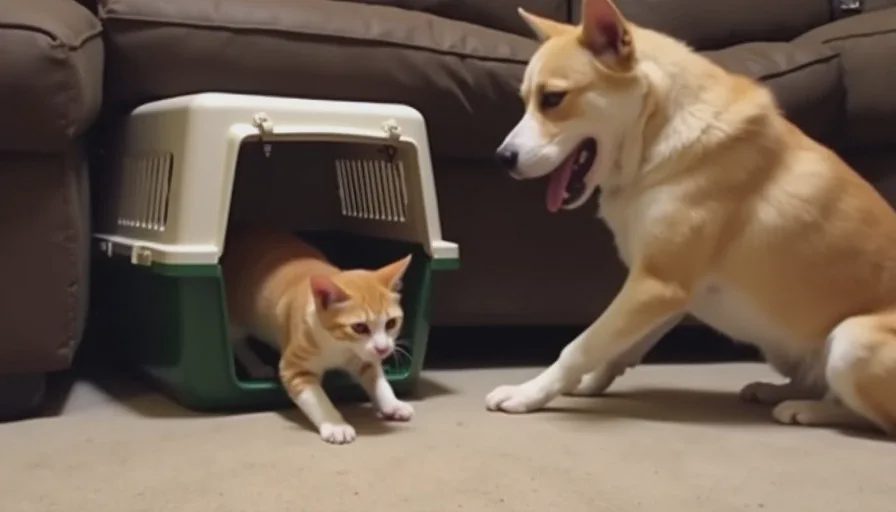
I brought the cat home on a Saturday afternoon, placed her carrier in the middle of the living room, and opened the door. The dog was right there, tail wagging, sniffing furiously. The cat shot out of the carrier like a rocket, bolted under the couch, and stayed there for three days. The dog stood guard, staring at the couch, barking every time the cat made a sound.
I thought I was doing the right thing by letting them "meet naturally." Instead, I created a terrified cat, an obsessed dog, and a household that felt like a war zone.
I learned this one the messy way.
If I could go back and redo that first week, I'd do almost everything differently. Here's what we rushed—and what I wish I'd done instead.
Mistake #1: No "Safe Room" for the Cat
I brought the cat home and let her have free run of the house. I thought it would help her adjust faster. Instead, she was overwhelmed by the open space, the strange smells, and a curious dog who wouldn't leave her alone.
What I should have done:
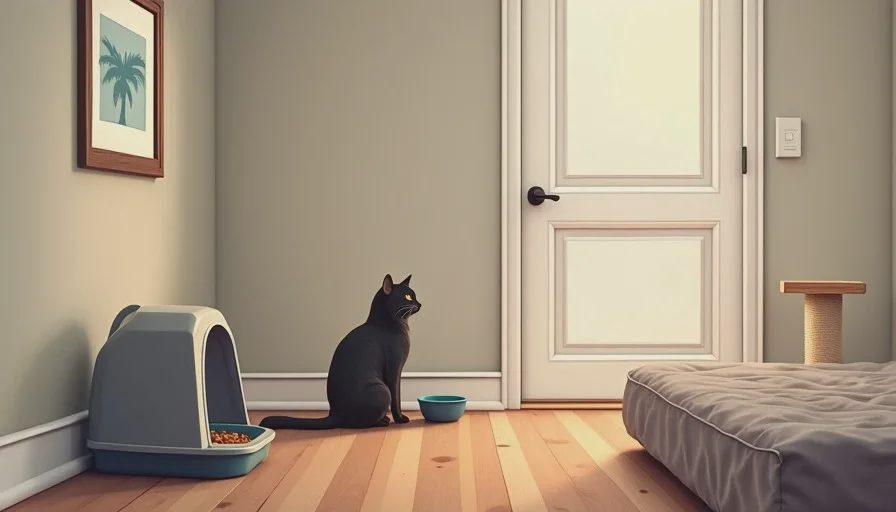
Set up a dedicated safe room for the cat before she even arrived. This should be a quiet, dog‑free space with:
A closed door (the dog cannot enter).
A litter box (away from food and water).
Food and water bowls.
A cozy bed or blanket.
A few toys and a scratching post.
Ideally, a window perch or high shelf for perching.
The cat should stay in this room for the first few days—or even a week—until she's comfortable and confident. This gives her time to decompress and learn that this new house has a "home base" where she's safe.
We didn't do that. The cat had nowhere to retreat except under the couch, where she felt trapped. That set the tone for weeks of stress.
Mistake #2: Letting the Dog "Investigate" Too Much
I thought it was cute that my dog was so interested in the new cat. She'd sniff the carrier, wag her tail, and follow the cat everywhere. I didn't stop her.
What I didn't realize:
To a cat, a big, sniffing, staring dog is a predator. Even if the dog is friendly, the cat's instinct is to flee or hide. Allowing the dog to "investigate" freely created a sense of threat that the cat never quite shook off.
What I should have done:
Before the cat even arrived, I should have trained my dog to have a "leave it" command that was rock‑solid. And when the cat arrived, I should have kept the dog on a leash during any initial introductions—not loose and uncontrolled.
We eventually did that, but only after the cat had already been traumatized. If I'd started with a calm, controlled introduction, the cat would have felt much safer from day one.
Mistake #3: Rushing the Visual Introduction
After two days of the cat hiding under the couch, I decided to force a meeting. I picked up the cat (she hissed), brought her close to the dog (the dog wagged), and held them both while they "looked at each other."
What happened:
The cat scratched me, bolted, and hid under the bed for another 48 hours. The dog was confused and started whining at the bedroom door. I had set their relationship back by weeks.
What I should have done:
Introductions should be gradual and stress‑free, using scent and sight before physical contact.
The proper step‑by‑step:
Scent swapping: Rub a towel on the cat, then let the dog sniff it. Rub a towel on the dog, then let the cat sniff it. Do this for a few days before they ever see each other. This normalizes each other's smell.
Visual introductions through a barrier: Crack the door to the safe room so they can see each other, but the cat is still protected. Feed them on opposite sides of the door (without visual contact, then gradually with visual contact through a baby gate or crack). Association: seeing the other = food = good.
Controlled, leashed meetings: When both are calm, allow brief, leashed meetings in a neutral area (not the cat's safe room). Keep the dog on a leash, and let the cat approach if she wants. End the session on a positive note before anyone gets stressed.
Supervised, off‑leash time: Only when both are relaxed and ignoring each other can you allow off‑leash time with supervision.
We skipped steps 1‑3 and went straight to forced face‑to‑face. That was our biggest mistake.
Mistake #4: No Vertical Escape Routes
Cats are climbers. Dogs are ground‑dwellers. A cat's natural defense is to go up high where a dog can't reach.
What we did wrong:
Our house had no cat trees, shelves, or high perches. The cat's only escape route was under furniture, where she'd get cornered by the dog.
What I should have done:
Before the cat arrived, I should have installed:
At least one tall cat tree (6 feet or higher) in the main living area.
Wall shelves or a window perch that the dog can't reach.
Furniture configuration that lets the cat move from room to room without touching the ground (e.g., a series of shelves or a "cat highway").
Now we have two cat trees and a set of wall shelves. The cat can traverse the entire living room without ever touching the floor. She feels safe, and the dog has learned to ignore her when she's up high.
Mistake #5: Not Separating Feeding and Litter Box
I put the cat's food and water right next to the dog's bowls because I thought it was convenient. The cat refused to eat there. She'd wait until the dog was asleep, then sneak in for a few bites.
The litter box problem:
I put the litter box in the laundry room—with no baby gate. The dog could walk right in and eat the cat's waste (yes, dogs do this). The cat was so stressed she started avoiding the box and having accidents elsewhere.
What I should have done:
Cat's food and water: Put them in the cat's safe room (behind a closed door) or on a high counter the dog can't reach. The cat needs to eat without the dog hovering.
Cat's litter box: Place it in a quiet, dog‑free location—preferably behind a baby gate with a small "cat‑only" opening, or in a room with a door that can be left slightly ajar (with a doorstop so the cat can push it, but the dog can't).
Scoop daily: A clean box is less appealing to dogs (and more appealing to cats).
We eventually moved the litter box to the bathroom and installed a baby gate that the cat can jump over but the dog can't. Problem solved.
Mistake #6: Expecting Them to Be Friends Immediately
I had this fantasy: the dog and cat would cuddle together on the couch within days. I'd take photos and post them on social media with a caption about "new best friends."
Reality:
It took four months before they could be in the same room without hissing or growling. And they still don't cuddle. They tolerate each other. Sometimes they nap near each other, but never touching.
And that's okay.
What I should have done:
Adjust my expectations. A peaceful coexistence is the goal, not friendship. If they become friends, that's a bonus. But the priority is safety and low stress for both animals.
Now, I celebrate small wins: the cat sitting on the same couch as the dog, or the dog ignoring the cat when she walks by. That's progress.
What I'd Do Differently (The Step‑By‑Step Plan)
If I could reset that first week, here's exactly what I'd do:
One month before adoption:
Install cat trees and vertical escape routes.
Teach the dog a solid "leave it" command.
Get the cat's safe room ready with food, water, litter, and bedding.
Week before adoption:
Practice scent swapping with a towel from the shelter (ask the shelter for a blanket with the cat's scent).
Day of adoption:
Bring the cat home directly to the safe room. Close the door. Let the cat explore alone.
Do not let the dog see the cat. Keep them separated for at least 24‑48 hours.
Days 1‑3:
Feed both animals on opposite sides of the door (scent association).
Swap bedding between the cat and dog so they get used to each other's smell.
Let the cat explore the house while the dog is crated or in another room (so the cat learns the layout without fear).
Days 4‑7:
Cracking the safe room door with a baby gate or a doorstop so they can see each other but can't physically interact.
Short, leashed meetings in a neutral area (dog on leash, cat free to approach or retreat).
End every interaction with treats for both.
After week 1:
Gradually increase supervised, off‑leash time in small increments.
Always provide escape routes for the cat (cat trees, open doors).
Never leave them alone together unsupervised until you've had many stress‑free interactions over several weeks.
The Good News: They Eventually Figured It Out
Despite all our rushed mistakes, our dog and cat eventually found a rhythm. It took patience, adjustment, and a lot of trial and error. But today, they share the same room. The cat walks past the dog without flinching. The dog doesn't chase. They're not best friends, but they're peaceful roommates.
If I could go back, I'd tell my past self: slow down, separate them, and let the cat feel safe first. The dog will adjust. The cat will adjust. But they need time and space to do it on their own terms.



Letters
No letters yet. Yours could be the first.