Finding cats for cat allergies can feel like trying to solve two opposite problems at once. You want the companionship, odd little routines, and warm purring on the couch, but you do not want itchy eyes, sneezing, or a tight-feeling throat to become part of your daily life. I learned this one the messy way: the cat itself was not the only issue. Fabric, litter dust, cleaning habits, and where the cat slept all made a noticeable difference.
The honest starting point is that no cat is completely hypoallergenic. Cat allergies usually involve proteins, especially Fel d 1, found in saliva, skin flakes, and other materials spread through a cat’s fur. Some cats produce less of the protein, and some households manage exposure better than others. That means choosing cats for cat allergies is about reducing risk and planning carefully, not finding a magical breed that guarantees no symptoms.
Which Cats May Be Easier for Allergy-Sensitive Homes?
Some breeds are often discussed as better choices for allergy-sensitive households because individual cats may produce less allergen or shed differently. Siberian cats, Balinese cats, Russian Blues, Devon Rex cats, Cornish Rex cats, and Sphynx cats frequently appear on lists of cats for cat allergies. That does not make them allergy-proof. A Sphynx still produces allergen through its skin and saliva, while a long-haired cat may not automatically be worse for every person.
Individual variation matters more than a breed label. Two cats from the same breed can affect you differently. Before adoption, spend time in a closed room with the specific cat for at least thirty minutes, then pay attention to symptoms later that day. If possible, repeat the visit on another day. A quick visit at an adoption event can be misleading because ventilation, cleaning products, and other animals change the environment.
A foster-to-adopt arrangement is especially useful. It gives you time to learn whether your eyes, nose, or breathing react after several days of normal contact. Ask the rescue whether the cat has lived with children, dogs, or other cats, because temperament matters just as much as allergen exposure in a busy beginner home.

Test Your Allergy Plan Before Adoption
Before bringing home cats for cat allergies, create a small trial routine. Visit the cat, touch its fur, sit where it sleeps, and wash your hands afterward. Do not rub your eyes or face during the visit. Wear the same type of clothing you normally wear at home, because allergens can cling to fabric and travel back with you.
Talk with an allergist if your reactions have been strong, especially if you have wheezing or asthma. A professional can help identify whether cats are the main trigger and discuss options such as medication, allergy testing, or immunotherapy. Do not rely on a rescue volunteer to predict your medical response. They can describe the cat’s habits, but they cannot assess your health.
Also consider who shares your home. A partner may react differently from you, and children may have difficulty explaining early symptoms. Keep a simple note of sneezing, congestion, itchy skin, and breathing changes after each visit. This is not about becoming obsessive; it is about making a calmer decision with useful information.
Set Up the House Before the Cat Arrives
The easiest time to make allergy-friendly changes is before adoption day. Choose one room with hard flooring for the main sleeping and feeding area. Remove heavy curtains, extra throw pillows, and fabric baskets that collect dust. A washable couch cover can save your furniture and reduce the amount of hair and dander trapped in upholstery.
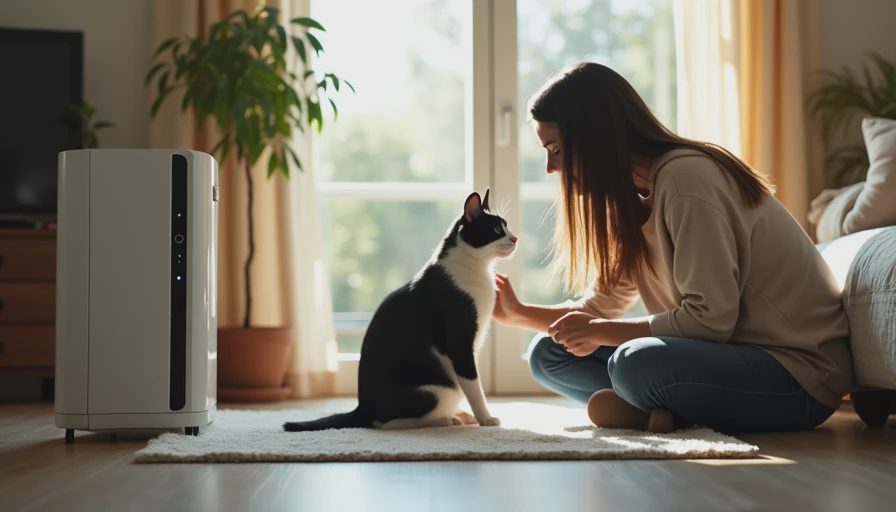
Use a high-efficiency particulate air purifier in the bedroom or the room where you spend the most time. Keep the cat out of your bedroom at first, even if that feels unwelcoming. A closed bedroom door creates one lower-allergen refuge where you can sleep. Wash bedding weekly in hot water when the fabric allows, vacuum floors with a sealed vacuum, and damp-mop hard surfaces instead of dry dusting.
Litter can create a separate problem. Fragranced clay litter may irritate sensitive noses, and dusty litter can make symptoms feel worse. Try a low-dust, unscented formula, but change gradually if the cat is already comfortable with another type. Put the box in a well-ventilated area away from food, then scoop daily. A litter mat helps keep particles from spreading across the home.
Daily Habits That Reduce Exposure
Living successfully with cats for cat allergies usually depends on boring, repeatable habits. Wash your hands after petting the cat, especially before eating or touching your face. Avoid allowing the cat onto pillows, blankets, and clothing piles. If the cat sits on your lap, keep a washable throw nearby and put it in the laundry rather than shaking it indoors.
Regular brushing can remove loose hair before it lands around the house, but the most allergy-sensitive person should not handle brushing. Ask another household member to do it outdoors or in a ventilated utility area. Bathing is not a realistic routine for most cats and can create stress, scratches, and a messy fight. Focus on cleaning surfaces instead.
Feed, play, and sleep on a schedule. Predictable routines make it easier to notice where allergens accumulate and when symptoms appear. A cordless vacuum near the litter box, enzyme-free cleaning cloths for furniture, and a washable mat under food bowls are inexpensive tools that prevent small messes from becoming household projects.
Common Mistakes I Would Avoid Now
The first mistake is trusting the phrase “hypoallergenic cat” too literally. It is useful as a search term, but it is not a medical guarantee. The second mistake is adopting based only on appearance. I have seen people choose a beautiful breed online, skip an in-person allergy trial, and then feel trapped when symptoms appear.
Another mistake is putting the cat’s bed in the bedroom because it seems convenient. That can make the one room needed for restful sleep the room with the most concentrated exposure. I would also skip expensive sprays that promise to neutralize every allergen. Some products may help with surfaces, but they do not replace ventilation, laundry, vacuuming, and sensible room boundaries.
Finally, do not ignore breathing symptoms to prove that you can manage. A cat should add companionship, not make the household feel medically unsafe. If symptoms become serious, contact a healthcare professional promptly and make a plan before increasing exposure.
A Practical Adoption Checklist
For cats for cat allergies, I would use this order: first, discuss the idea with an allergist if reactions have been significant. Next, meet the exact cat more than once in a controlled setting. Ask whether foster-to-adopt is available. Prepare a cat-free bedroom, a low-dust litter station, washable covers, and a sealed vacuum before pickup day.
During the first week, keep the cat in one prepared room while everyone adjusts. Notice where the cat sleeps, how much it sheds, and when symptoms appear. Expand access gradually rather than opening every room immediately. Wash hands after handling the cat, clean floors regularly, and keep the bedroom boundary consistent.
The right cats for cat allergies are not necessarily the rarest or most expensive ones. They are the individual cats you can live with comfortably, combined with a home routine you can actually maintain. If I could reset the first month, I would spend less time hunting for a perfect breed and more time testing the specific cat, preparing the house, and protecting one clean sleeping space.



Letters
No letters yet. Yours could be the first.