When I brought home my first kitten, I assumed the best kitten food would be obvious: pick the bag with the cutest kitten and move on. Then I stood in the pet aisle comparing labels, textures, prices, and wildly different feeding instructions while a tiny cat yelled from the carrier. If you are in that same overwhelmed place, take a breath. Choosing well is less about finding a magical brand and more about matching a complete kitten diet to your kitten’s age, health, appetite, and your actual household routine.
What kittens need from their food
Kittens grow quickly, so their nutritional needs are different from those of adult cats. Look for food labeled for kittens or for all life stages, rather than a product made only for adult maintenance. The packaging should say that the food is complete and balanced for growth according to the nutritional standards used in the United States. That wording matters more than a front-label promise such as “premium” or “natural.”
A good formula should provide enough animal-based protein, fat, calories, and essential nutrients to support developing muscles, bones, organs, and vision. Taurine is especially important for cats, and a reputable commercial food should include it in an appropriate formula. You do not need to add supplements to a complete diet unless your veterinarian specifically recommends one. Extra vitamins can create problems instead of fixing them.
For most new owners, the best kitten food is one your kitten eats consistently, digests comfortably, and can afford to buy every few weeks. A $45 specialty case is not useful if it causes loose stool or becomes too expensive to maintain.

Wet, dry, or a combination?
Wet food has a high water content and is often easier for young kittens to chew. It can be helpful for a kitten that does not drink much from a bowl, although it does not replace veterinary care for dehydration or illness. Canned food also tends to smell stronger, which can tempt a nervous kitten to eat during the first stressful days at home.
Dry food is convenient, less messy, and easy to measure with a scoop. It can fit a busy morning when you are packing lunches or rushing out the door, but leaving a large bowl down all day can encourage overeating. Kittens need substantial calories, yet unlimited access is not automatically better.
Many households use both. You might serve a small portion of wet food at breakfast and dinner, then measure dry food for another meal. The best kitten food format is the one that supports regular eating, manageable costs, and a routine you can repeat. If you change from the shelter’s food, mix the new food in gradually over about a week when possible.
How to read the label without becoming a detective
Start with the life-stage statement and feeding directions. Then check the ingredient list, guaranteed analysis, calorie information, and expiration date. Ingredients are listed by weight, so the first item is not the entire story. A food with chicken listed first can still have a carefully balanced recipe, and a grain-free label does not automatically make a product healthier.
Do not assume that by-products are dangerous. Some organ tissues provide useful nutrients, and “by-product” is not the same as “scraps.” The more practical question is whether the complete formula comes from a manufacturer with clear quality-control information and customer support.
For the best kitten food, compare calories per can or cup instead of comparing sticker prices alone. A $2.20 can that supplies two kitten meals may be more economical than a $1.70 can that provides only one. This small calculation saved me from buying the cheapest-looking option and then running out several days early.
A feeding routine that works in a real home
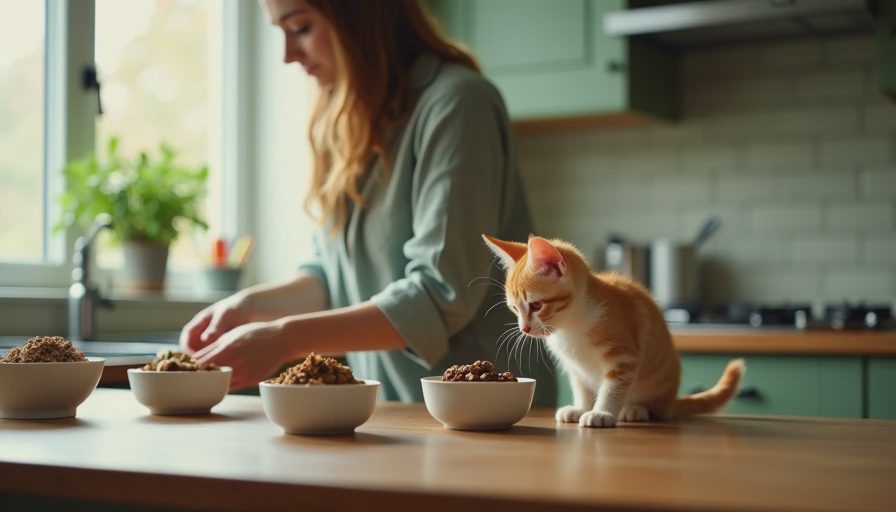
Young kittens usually do better with several small meals rather than one or two large servings. Follow the package’s starting guidance, divide the daily amount into meals, and adjust with your veterinarian if your kitten is underweight, gaining too quickly, or dealing with a medical condition. A kitchen scale is useful for measuring dry food, but you do not need a complicated spreadsheet.
Try feeding at consistent times, such as 7 a.m., noon, 5 p.m., and 10 p.m. The exact schedule can change, but predictable meals help you notice when something is wrong. Wash food and water bowls regularly, and keep the feeding area away from the litter box. In my house, moving the bowls just a few feet away stopped the dog from trying to “help” with every kitten meal.
The best kitten food will not fix a routine that is impossible to maintain. Use a small container with a lid, write the daily amount on a note near the bowl, and ask everyone in the household to follow the same plan. This prevents the classic double-feeding problem when two people both think they are being helpful.
When food causes trouble
A little hesitation during a food transition is common, but repeated vomiting, persistent diarrhea, refusal to eat, marked tiredness, or a swollen-looking belly deserves a call to a veterinarian. Kittens can become unwell faster than adult cats, so waiting several days is not a good experiment. Very young kittens, kittens with parasites, and kittens recovering from illness may need a more specific plan.
If stool changes after a new food, avoid switching among five brands in one weekend. Write down what your kitten ate, how much, and when symptoms appeared. Your veterinarian will find that information more useful than a vague report that “the food did not agree.” Also ask before offering milk, raw diets, homemade recipes, or human leftovers. These choices can create nutritional gaps or digestive problems, especially in a growing animal.
My practical shopping plan for beginners
If I could reset the first month, I would start with a modest supply of the food the kitten already knows, one backup flavor from the same product line, and a few shallow bowls. I would not buy a giant case until the kitten had eaten the food comfortably for at least a week.
When comparing the best kitten food options, check these five points: kitten or all-life-stage labeling, complete-and-balanced wording, a calorie statement, realistic feeding directions, and a price you can sustain. Purina ONE, Hill’s Science Diet, Royal Canin, Iams, and Purina Pro Plan are examples of widely available product lines with kitten formulas, but availability and individual tolerance still matter more than a famous name. Your veterinarian can also recommend a therapeutic diet if there is a diagnosed medical need.
A simple plan beats a perfect-looking cart. Buy from a reliable retailer, keep the receipt, transition gradually, and watch your kitten’s appetite, stool, energy, and body condition. The best kitten food is not the product that wins an online argument. It is the complete diet your kitten thrives on and your household can confidently serve every day.



Letters
No letters yet. Yours could be the first.