The short answer is yes, most healthy cats can eat a tiny amount of banana without being poisoned. But can cats eat bananas as a regular snack? Not really. Bananas are safe in small portions, yet they are not especially useful for a cat’s diet. Cats need animal-based nutrition, and fruit should stay an occasional taste rather than becoming part of every meal.
I learned this one the messy way after my cat stole a piece of banana from a breakfast plate. Nothing dramatic happened, but I spent the next hour searching for symptoms and wondering whether I had made a stupid mistake. The better approach is simple: understand the portion, remove the peel, and watch how your individual cat responds.
Can cats eat bananas safely?
For most healthy adult cats, a small piece of ripe banana is considered a low-risk treat. Bananas are not known to be toxic to cats, unlike foods such as onions, garlic, chocolate, grapes, raisins, and products containing xylitol. That does not make bananas a necessary food. It only means a bite or two is generally unlikely to cause poisoning.
The bigger concern is digestion. Bananas contain natural sugar and fiber, while cats are obligate carnivores whose bodies are designed around animal protein. A cat may enjoy the soft texture, but the fruit does not provide the nutrients found in a complete cat food. If your cat has diabetes, obesity, inflammatory bowel disease, or a sensitive stomach, even a small treat deserves more caution.
So, can cats eat bananas without a problem? Often, yes. Can every cat eat them comfortably? No. Individual reactions matter more than a viral video of a cat licking a slice.
How much banana can a cat have?
Start with a piece about the size of your pinky fingernail, or roughly a quarter teaspoon of mashed banana. That sounds comically small, but cats are small animals, and treats can add up quickly. If your cat handles that amount normally, an occasional piece closer to half a teaspoon is a reasonable upper limit for many adult cats.
Do not offer a whole slice, a handful of chunks, or banana every day. A large serving can contribute unnecessary calories and lead to loose stool, constipation, gas, or vomiting. Treats should remain a small part of the daily calorie intake, especially for indoor cats that spend much of the day sleeping on a windowsill.
A useful household rule is to cut the fruit before sitting down, rather than letting your cat grab food from your plate. That prevents the enthusiastic “just one more bite” routine that can turn a rare taste into several tablespoons.

The safest way to serve banana
Peel the banana completely and offer only the soft fruit. Banana peel is tough, fibrous, and difficult for a cat to digest. A swallowed piece could cause choking or contribute to an intestinal blockage, particularly in a kitten or a cat that gulps food.
Cut the fruit into a crumb-sized piece or mash a little onto a spoon. Do not mix it with chocolate, whipped cream, ice cream, peanut butter, sweeteners, or flavored yogurt. Those additions can introduce extra fat, sugar, dairy, or ingredients that are unsafe for cats. Plain fruit is the only version worth considering.
If you are asking can cats eat bananas because your cat keeps begging at breakfast, move the piece to a clean dish. This teaches the cat that human plates are not a buffet. It also makes it easier to track exactly how much was eaten.
When banana is a poor choice
Some cats should skip banana entirely. A cat with diabetes needs careful control of carbohydrate intake, and sugary treats can make that harder. A cat carrying extra weight also has better snack options, such as a few flakes of plain cooked chicken measured from its daily food allowance.
Kittens have more sensitive stomachs and should generally focus on a complete kitten diet instead of experimenting with fruit. Cats recovering from vomiting, diarrhea, pancreatitis, or another digestive problem should not receive new treats until a veterinarian has given the household a clear feeding plan.
Banana is also a poor choice if your cat has already shown digestive trouble after eating it. You do not need to keep testing the theory. If can cats eat bananas leads to repeated vomiting or diarrhea in your home, the answer for that individual cat is no, even if another cat tolerates a small bite.
What to watch for after a bite
Most cats that eat a tiny piece will simply walk away, ask for more, or act completely normal. Still, watch for vomiting, diarrhea, unusual gas, belly discomfort, drooling, gagging, loss of appetite, or lethargy during the next several hours. Mild stomach upset can happen after any unfamiliar food.
Call your veterinarian for advice if symptoms are repeated, severe, or accompanied by weakness, breathing trouble, collapse, or a swollen painful abdomen. If your cat swallowed banana peel, a large chunk, or another ingredient from a dessert, mention exactly what was eaten and approximately how much. Do not induce vomiting at home unless a veterinary professional specifically instructs you to do so.
If your cat ate a tiny plain piece and is acting normally, there is usually no need to panic. Put the rest away, offer normal water and food, and avoid adding more new treats that day. This calm response is much more useful than repeatedly checking the litter box every five minutes, which I have absolutely done.
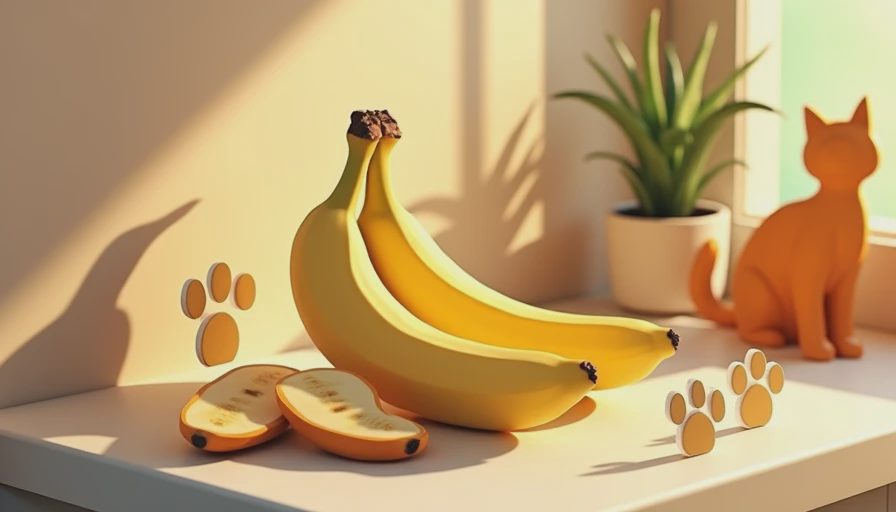
Better treat ideas for everyday cat routines
If you want a reward for nail trimming, carrier practice, or coming when called, use something that fits a cat’s nutritional needs more closely. A few pieces of the cat’s regular kibble can work well. You can also use tiny portions of plain cooked chicken or turkey with no salt, garlic, onion, butter, or seasoning. Commercial cat treats are fine when portions are small and the product is appropriate for your cat’s age and health.
For carrier training, place one treat near the entrance, then farther inside, and eventually on the carrier floor. The reward does not need to be exciting human food. It needs to create a predictable connection between the carrier and something pleasant. That routine is more valuable than proving can cats eat bananas at every opportunity.
If I could reset the first month with my cat, I would keep people food boring and cat treats measured. A tiny banana taste is not automatically dangerous, but it is also not a nutritional upgrade. Use it rarely, skip the peel, start with a crumb-sized portion, and choose a veterinarian-approved routine when your cat has a medical condition.


Letters
No letters yet. Yours could be the first.